


If you’ve ever asked a financial advisor in Malaysia where to put your money, chances are the answer included unit trusts.
They’re one of the most widely held investment products in the country—familiar, accessible, and marketed heavily by banks and fund houses. But a growing number of Malaysian investors are starting to ask a different question: would I be better off buying stocks directly?
It’s a fair question. The Malaysia stock market offers access to blue-chip names on Bursa Malaysia—Maybank, CIMB, Publica Bank, Tenaga Nasional—at a fraction of the cost of most unit trust management fees. But that doesn’t automatically make stocks the right choice for everyone.
The answer depends on what kind of investor you are, how much time you’re willing to put in, and what you’re trying to achieve.
How Unit Trusts Work in Malaysia

A unit trust pools money from many investors and hands it to a professional fund manager who decides where to invest it. In Malaysia, unit trusts are regulated by the Securities Commission and distributed through banks, fund platforms, and licensed agents.
The range is wide—equity funds, bond funds, balanced funds, Shariah-compliant options—and most EPF members can even use a portion of their Account 1 savings to invest in approved unit trusts.
The Appeal
Unit trusts are hands-off. You don’t need to pick individual companies, monitor quarterly earnings, or decide when to buy and sell. The fund manager does all of that.
For people who want exposure to the market without the time commitment of active investing, that’s a real advantage.
The Cost Question
The catch is fees. Most Malaysian unit trusts charge an upfront sales charge of 3–5% on every contribution, plus an annual management fee of 1.5–2%.
That means before your investment earns a single sen, it’s already in the red. Over a ten-year period, these compounding fees can take a meaningful bite out of your returns—something many investors don’t fully appreciate until they compare their actual gains against the fund’s headline performance.
How Direct Stock Investing Compares
When you buy stocks directly on Bursa Malaysia, you own shares in specific companies. There’s no middleman fund manager and no annual management fee eating into your returns.
Your costs are limited to brokerage commissions on each trade—and with the rise of digital brokers, those fees have dropped significantly.
Control and Transparency
The biggest advantage of buying stocks directly is control. You choose exactly which companies to own, when to buy, and when to sell. You can see the price you paid, the dividends you received, and the current value of your holdings at any time.
With unit trusts, your actual portfolio is a black box—you know the fund’s overall NAV, but not the real-time decisions being made with your money.
The Trade-Off: Time and Knowledge
Direct investing requires more effort. You need to research companies, understand financial statements, and keep up with market developments.
For someone willing to invest that time, the rewards can be substantial—both financially and in terms of the financial literacy you build along the way.
But if you have no interest in following the market, that’s a real consideration.
A Direct Comparison
Here’s how unit trusts and direct stock investing stack up across the factors that matter most:
| Factor | Unit Trusts | Direct Stocks (Bursa) |
| Upfront Cost | 3–5% sales charge | Brokerage fee per trade (often under 0.1%) |
| Annual Fees | 1.5–2% management fee | None |
| Control | Fund manager decides | You decide what to buy/sell |
| Diversification | Built-in (fund holds many stocks) | You build your own portfolio |
| Minimum Investment | As low as RM100/month | 1 lot (100 shares) per purchase |
| Transparency | NAV reported daily, holdings quarterly | Real-time pricing and full visibility |
| Effort Required | Low — set and forget | Higher — requires research and monitoring |
| Dividend Access | Reinvested by fund (usually) | Paid directly to your account |
Who Should Choose What
This isn’t a clear-cut winner-takes-all situation. The right choice depends on where you are as an investor.
Unit Trusts Make Sense If…
You’re just getting started and want market exposure without picking individual stocks. You don’t have time to research companies.
You prefer a hands-off approach where someone else manages the allocation. Or you want to use your EPF savings to invest through an approved fund.
Stocks Make Sense If…
You want to keep more of your returns by avoiding ongoing management fees. You’re willing to learn how companies on the KLCI and broader Bursa Malaysia operate.
You want to collect dividends directly—especially from high-yield sectors like banking and utilities. Or you want full control over what you own and when you trade.
Many investors end up doing both—using unit trusts for broad exposure and holding individual stocks for companies they’ve researched and believe in.
That hybrid approach is perfectly reasonable, and increasingly common among Malaysian investors looking to optimise their returns across different risk levels.
Making the Move to Stocks
If you’re currently invested in unit trusts and curious about adding direct stock exposure, the process is straightforward. You’ll need a CDS (Central Depository System) account to hold your shares and a trading account with a licensed broker.
From there, start with companies you already know and follow—the banks you use, the utilities you pay, the brands you see every day. Familiarity with a business is a legitimate starting point for research.
How Moomoo Helps You Invest Directly
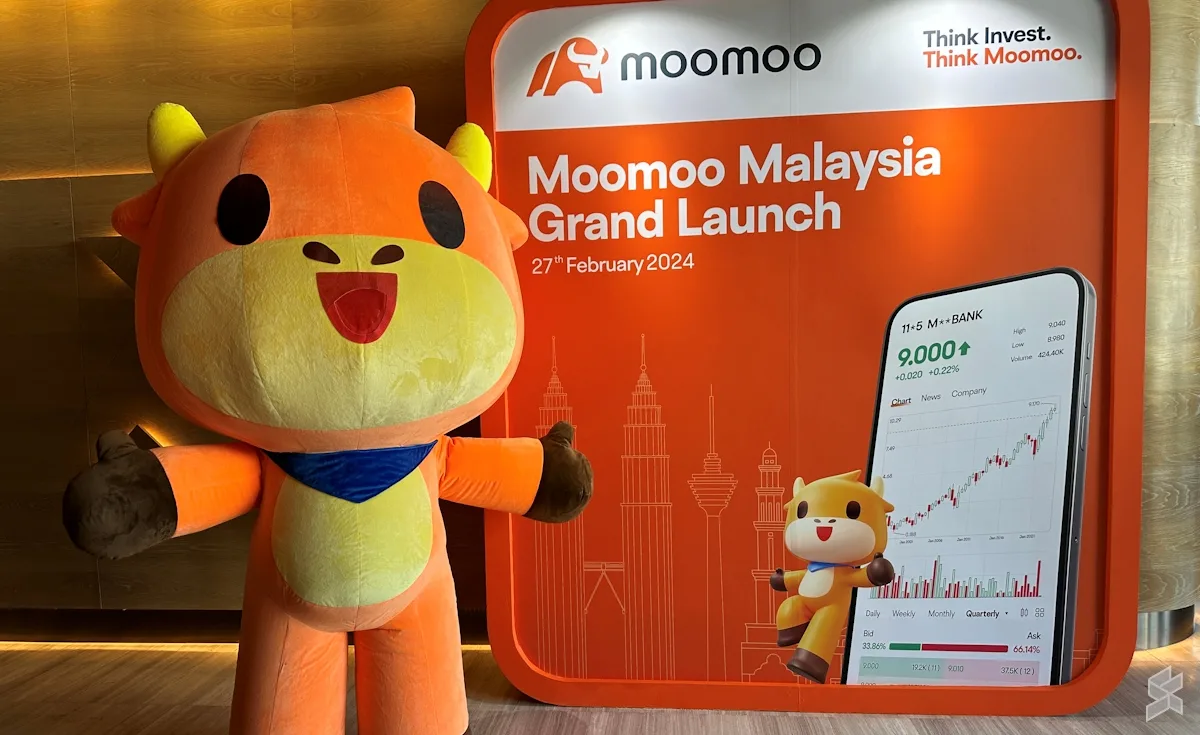
Malaysian Stock Trading with Low Fees
For investors comparing the cost of unit trusts against direct stock ownership, the fee difference is where Moomoo stands out.
Moomoo MY offers access to over 1,000 Malaysian stocks, ETFs, REITs, and warrants on Bursa Malaysia—with 0% commission on all trades for the first 180 days.
That’s a full six months of commission-free trading across both Malaysian and US markets, compared to the 3–5% upfront sales charge most unit trusts levy on every contribution.
After the introductory period, platform fees remain among the lowest for any SC-licensed broker in Malaysia, and there’s no minimum deposit to open an account.
For investors used to watching annual management fees quietly erode their unit trust returns, the cost structure of direct stock trading can be a meaningful upgrade.
Moomoo AI: Making Stock Research Accessible
One reason many investors stick with unit trusts is the research burden—picking individual stocks feels overwhelming without a fund manager to do the analysis.
Moomoo AI helps level that playing field by providing instant, AI-generated insights on any stock or ETF. It summarises key fundamentals, recent performance, and analyst sentiment in seconds, cutting through the noise that typically intimidates first-time stock investors.
The tool works across all five markets available on the platform—Malaysia, US, Singapore, Hong Kong, and China—so investors can research both local blue-chips on Bursa and global opportunities from a single interface.
For anyone transitioning from unit trusts to direct stock ownership, having an AI-powered research assistant built into the app significantly reduces the learning curve.
Bursa IPO Subscription: Access New Listings Digitally
One advantage of direct stock investing that unit trusts simply cannot offer is access to IPOs. Moomoo was the first platform in Malaysia to offer a fully digitalised IPO subscription process—no paperwork, no branch visits, everything handled within the app.
Subscription fees and CDS account-IPO fees are currently zero, removing the cost barrier that has traditionally made IPO participation less accessible for retail investors.
The app includes a built-in IPO calendar showing upcoming Bursa Malaysia listings with timelines, and allotted shares are automatically transferred to your trading account before listing day.
For investors looking to participate in new company listings—something a unit trust fund manager decides on your behalf—this puts the choice directly in your hands.
Cash Plus: Earn Returns on Idle Cash
When you move money out of unit trusts and into a brokerage account, not all of it needs to be invested in stocks at once.
Moomoo’s Cash Plus feature lets you earn daily returns on uninvested cash sitting in your account—starting from as little as RM0.01 with no lock-in period. Average yields sit above 3.5% p.a., comparable to short-term fixed deposit rates but without sacrificing liquidity.
Funds can be redeemed instantly for stock trading, IPO subscriptions, or withdrawal. Shariah-compliant money market fund options are also available, making Cash Plus a practical holding spot for investors who want their idle capital working while they research their next stock purchase.
Frequently Asked Questions
How do I start investing in Malaysia stocks?
To invest in stocks listed on Bursa Malaysia, you need a CDS (Central Depository System) account and a trading account with a licensed broker.
Is it better to invest in unit trusts or Malaysia stocks directly?
It depends on your goals and how involved you want to be.
Unit trusts offer hands-off diversification managed by a professional fund manager, but come with upfront sales charges of 3–5% and annual management fees of 1.5–2%.
What can you trade on Moomoo?
Moomoo MY provides access to five major stock markets from a single app: Malaysia (Bursa Malaysia), United States (NYSE and NASDAQ), Singapore (SGX), Hong Kong (HKEX), and China (A-shares).
Available products include stocks, ETFs, REITs, warrants, and US options. This means investors can diversify across markets and asset classes without needing separate brokerage accounts.
How do I buy stocks on Moomoo?
To start investing on Moomoo MY, you need to open a universal account through the app—a process that takes under five minutes. A CDS (Central Depository System) account is set up as part of the onboarding to hold your Malaysian shares.
What is Moomoo Cash Plus?
Moomoo Cash Plus is a money market fund feature that lets investors earn daily returns on uninvested cash in their brokerage account.
