


Life in the modern world is pervaded with questions. It has never been easier to find the correct answer on the internet – but it feels even more difficult than ever.
Search engines do give pages of blue links, social feeds are full of unauthenticated opinion, and specialized forums each require a login.
Learners who compete to beat a midnight deadline, scientists who are re-verifying a reference, and average problem-solvers all have one desire in common: a single, reliable answer within seconds, not minutes.
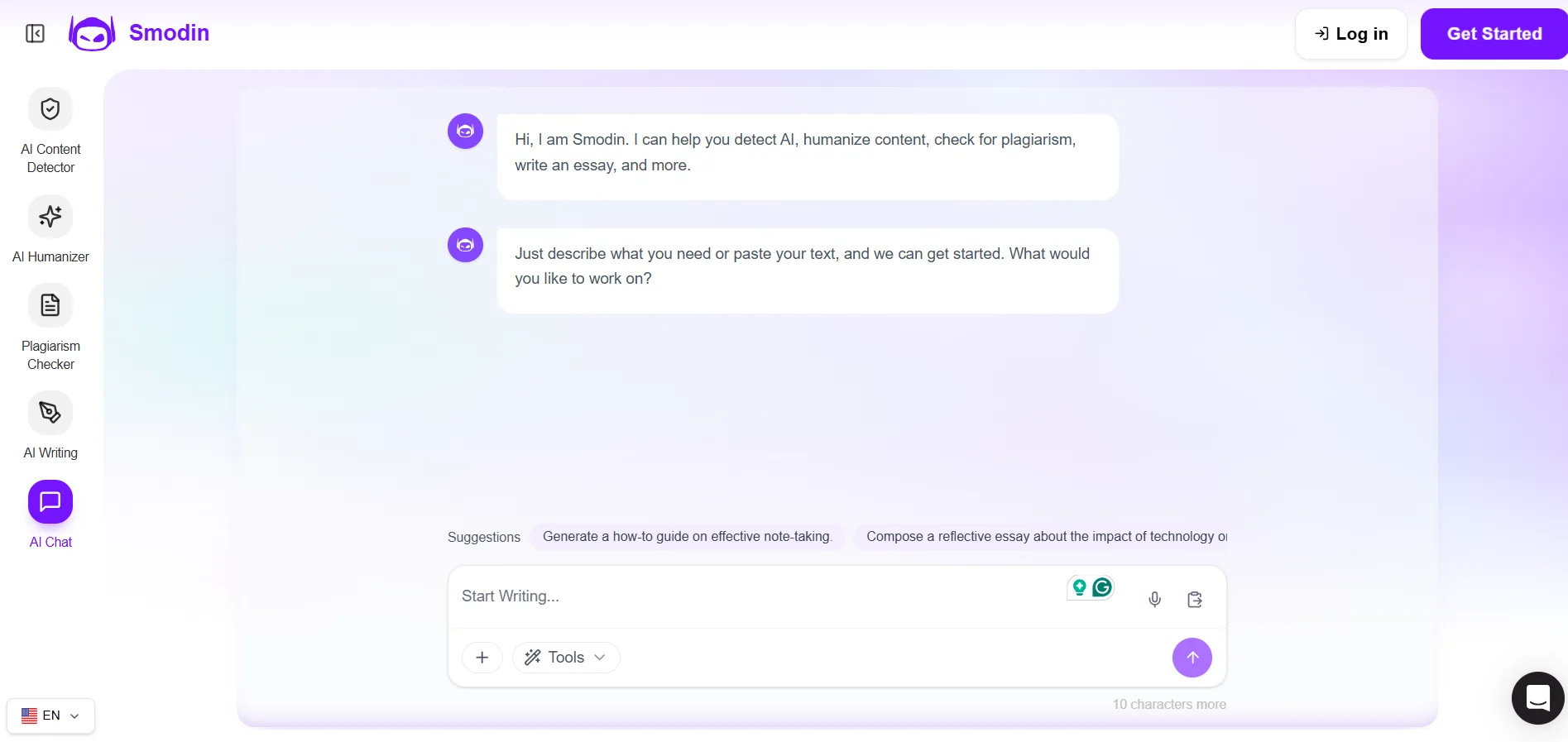
In response, Smodin’s new AI chat assistant steps onto the scene as an always-ready study buddy and research partner that understands conversation instead of isolated keywords.
By combining a language model with real-time web access and a set of writing utilities, it narrows the gap between posing a question and producing shareable output.
Traditional search is designed to index documents as opposed to dialogue. Search explain CRISPR to a high-school class, and you get scientific papers, press releases, and blog posts, and you have to spend minutes assembling them yourself.
Conversational answer engine flips the load: It makes sense of the mottled query, retrieves credible sources, and gives one didactic response. With ten fruitless clicks, such a difference is dramatic.
Information Overload Meets Limited Time
The challenge is not only volume but context. When a graduate student continues a research thread the next morning, they do not want to re-paste the last four paragraphs of their literature review. An assistant who remembers prior turns removes this friction.
Continuity transforms a session from a series of disjointed searches into a flowing dialogue, much like working beside a knowledgeable peer who never forgets what was said five minutes ago.
Access to timely data matters just as much. In 2026, the half-life of online information feels shorter than ever; market figures, policy updates, and scientific preprints all surface daily.
A tool that can reach beyond its training cut-off and pull verified statistics from current sources saves users the headache of manual cross-checking.
For example, a researcher tracking lithium battery patents can ask for yesterday’s filings and receive citations straight from patent offices instead of last year’s blog summaries.
Conversation Versus Keywords
Keywords are blunt, assuming the user already knows the magic terms. Conversation is forgiving; curiosity can wander.
A first-year student may start with “I don’t get what the psi symbol means.” The agent reads that as a plea for intuition, not just a formula.
Follow-up prompts like “show me a simple sketch” refine the answer without restarting the search, creating a loop that feels like real tutoring.
What Sets This Tool Apart?
Prompt enhancement is one of the quieter but more practical features. Before the message ever reaches the model, the system suggests clarifying details: “Do you want a summary or a full derivation?” A quick click upgrades a vague prompt into a precise one.
New users appreciate the guidance; experienced users leverage it to squeeze extra detail without extra typing.
Integration with productivity utilities is also very attractive. Once an outline is provided, a user can forward it directly to the paraphraser to change the tone, scan it with the plagiarism detector to ensure originality, or export it to a Word file to do final formatting.
Having those steps within a workspace will make a five-tab ritual a one-workflow. To teachers with dozens of lesson plans, that is a translation of hours saved in a week.
Real-time sourcing is also special in real-life situations. Suppose you have a grant proposal underway for coastal erosion.
You request the latest sea-level information at NOAA, paste the figures into your draft, and ask it to give you a 150-word abstract – all in the same chat box.
Due to the citations that are attached to the response, you are able to check each of the figures prior to submitting, which meets both speed and academic standards.
Conclusion
Universal knowledge at our fingertips was the best promise of the internet; the worst has been the noise that has drowned the knowledge out.
A conversational answer engine with context memory, retrieval of new information, and a smooth transition to writing supports is a practical solution.
It is like polishing a dissertation, it is like troubleshooting code, it is like a dinnertime argument, it is the correct answer at the right time that can translate confusion to clarity.
That clarity is a driving force of further research among learners and professionals in various disciplines. Much smarter to get answers online, that is, after all.
