


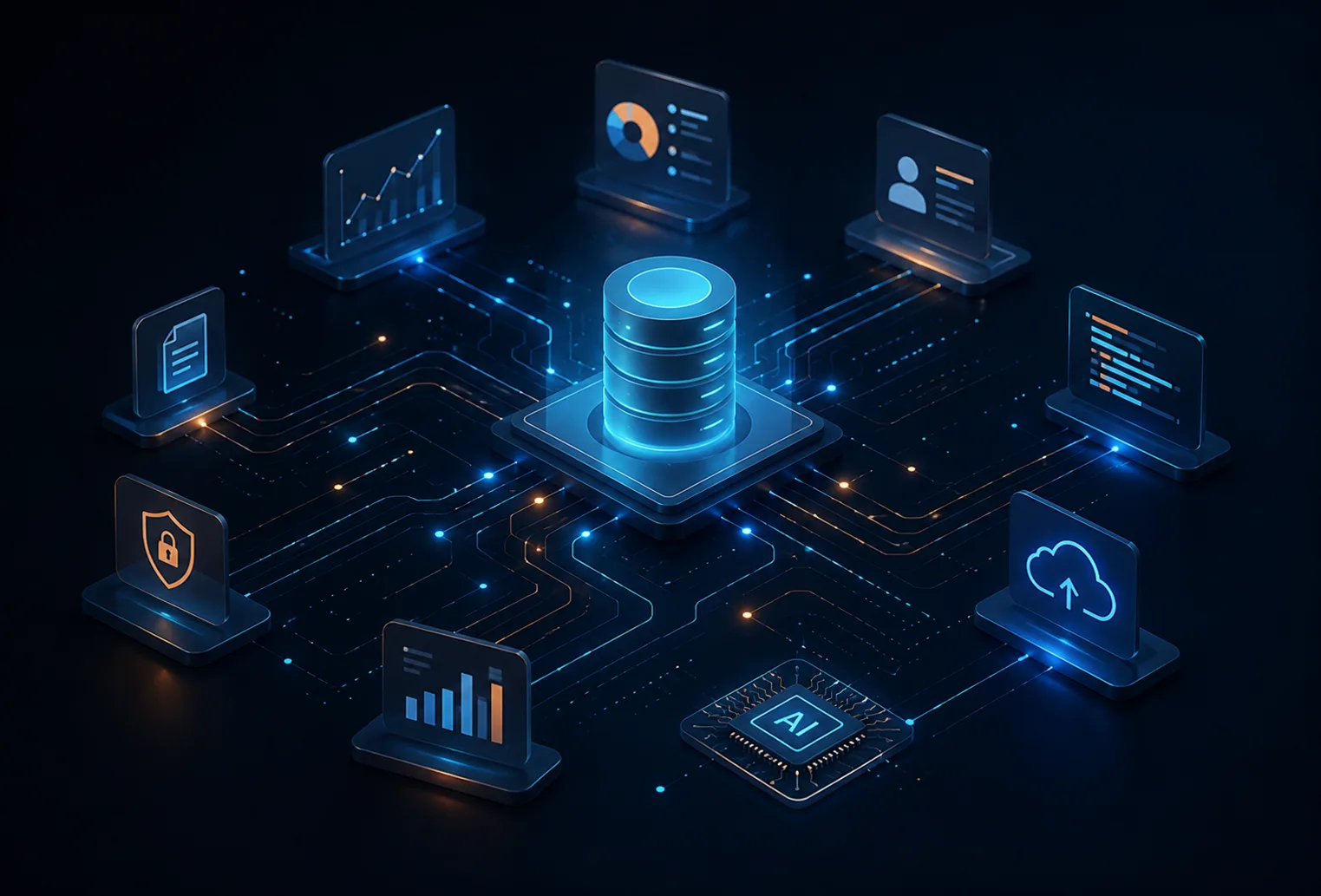
Most businesses already generate more data than their teams can realistically process. The problem is rarely access to information — it is the inability to turn that information into fast, reliable decisions.
A lot of companies already have the data they need. Most companies already have the information they need.
It’s just scattered across too many places. Instead of focusing on execution, teams spend hours searching for updates, validating reports, and coordinating information between disconnected systems.
AI data solutions are changing this model. Rather than depending entirely on historical reporting, organizations can implement AI-driven data pipelines capable of analyzing operational signals continuously and generating insights in near real time.
This has also expanded the role of modern AI consulting. Businesses now work with generative AI consulting companies to build systems that can retrieve information across multiple platforms, automate decision flows, and reduce the manual coordination required in day-to-day operations.
The goal is no longer simply testing AI capabilities. Organizations increasingly need stable infrastructure that can integrate with existing systems, support real operational workloads, and scale reliably as data volume grows.
What is AI data solutions consulting?
AI data solutions consulting combines data engineering, workflow integration, and AI implementation to help organizations build scalable data environments.
In practice, the work often goes beyond AI models themselves. Consultants typically focus on building the systems behind them — connecting operational platforms, organizing data flows, and automating how information moves across the business.
Many generative AI consulting services now support both structured and unstructured data environments, allowing businesses to process internal documents, operational records, customer activity, and real-time system data within a unified workflow.
What services do AI data consultants provide?
The role of AI data consultants is usually tied directly to operational bottlenecks.
Many operational delays are caused less by missing tools and more by fragmented workflows between existing systems.
Teams often need to switch between multiple platforms to retrieve information, validate updates, and gather the context required for everyday decisions.
AI data solutions help reduce this coordination overhead. Businesses can automate information retrieval, monitor operational activity continuously, and generate real-time insights connected directly to existing workflows.
In retail operations, AI systems are commonly used to automate customer support workflows and improve access to contextual information during interactions.
In logistics, AI-driven data platforms help organizations monitor shipment movement continuously and maintain operational visibility across supply chain processes.
To support these workflows, a generative AI consulting company can build retrieval architectures, workflow automation systems, forecasting environments, and integrations with operational software already used inside the business.
Common challenges without AI data infrastructure
1. Inconsistent data visibility
Without centralized retrieval and orchestration systems, operational data often remains fragmented across separate environments.
2. High coordination overhead
Teams frequently rely on manual processes to synchronize information between departments, platforms, and reporting systems.
3. Limited automation capability
Disconnected infrastructure makes it difficult to automate workflows, forecasting, and operational decision-making reliably.
4. Reduced decision speed
When employees must retrieve and validate context manually, response times across operations become slower and less scalable.
Real-world examples: AI data solutions in retail and logistics
The clearest examples usually appear in industries where employees deal with constant operational updates and fragmented information flows.
Retail operations
Support operations in large organizations are often spread across multiple platforms, including CRM systems, ticketing tools, analytics environments, and internal documentation. As ticket volume grows, manual information retrieval can become a significant operational bottleneck.
One retail company processing approximately 15,000 support interactions monthly implemented AI-powered retrieval pipelines connected to its operational platforms.
The system automatically retrieved customer history, summarized prior interactions, and generated contextual recommendations for support agents.
After deployment, the organization reduced average handling time by nearly 30% while improving response consistency during peak operational periods.
Logistics operations
In logistics environments, similar operational issues often appear around shipment visibility and reporting delays.
A logistics provider processing thousands of shipments every week deployed AI-driven data systems to improve coordination across transportation workflows.
Instead of waiting for delayed reporting updates, operational teams received near real-time alerts when shipment activity indicated potential delays or disruptions across the supply chain network.
The company reduced manual reporting workload by approximately 40% and improved response speed for operational disruptions across distributed supply chain workflows.
These examples illustrate why many businesses now approach generative AI consultancy as infrastructure projects focused on operational execution rather than standalone AI deployment.
Why AI data infrastructure matters?
Operational complexity increases quickly as businesses grow. Data becomes harder to coordinate, workflows become more fragmented, and manual reporting processes become increasingly difficult to scale.
AI data solutions help organizations improve workflow automation, retrieval efficiency, and real-time operational visibility across distributed systems.
This reduces coordination overhead and allows teams to support forecasting and decision-making more effectively at scale.
For many organizations, this is becoming one of the most practical applications of AI inside day-to-day operations.
