


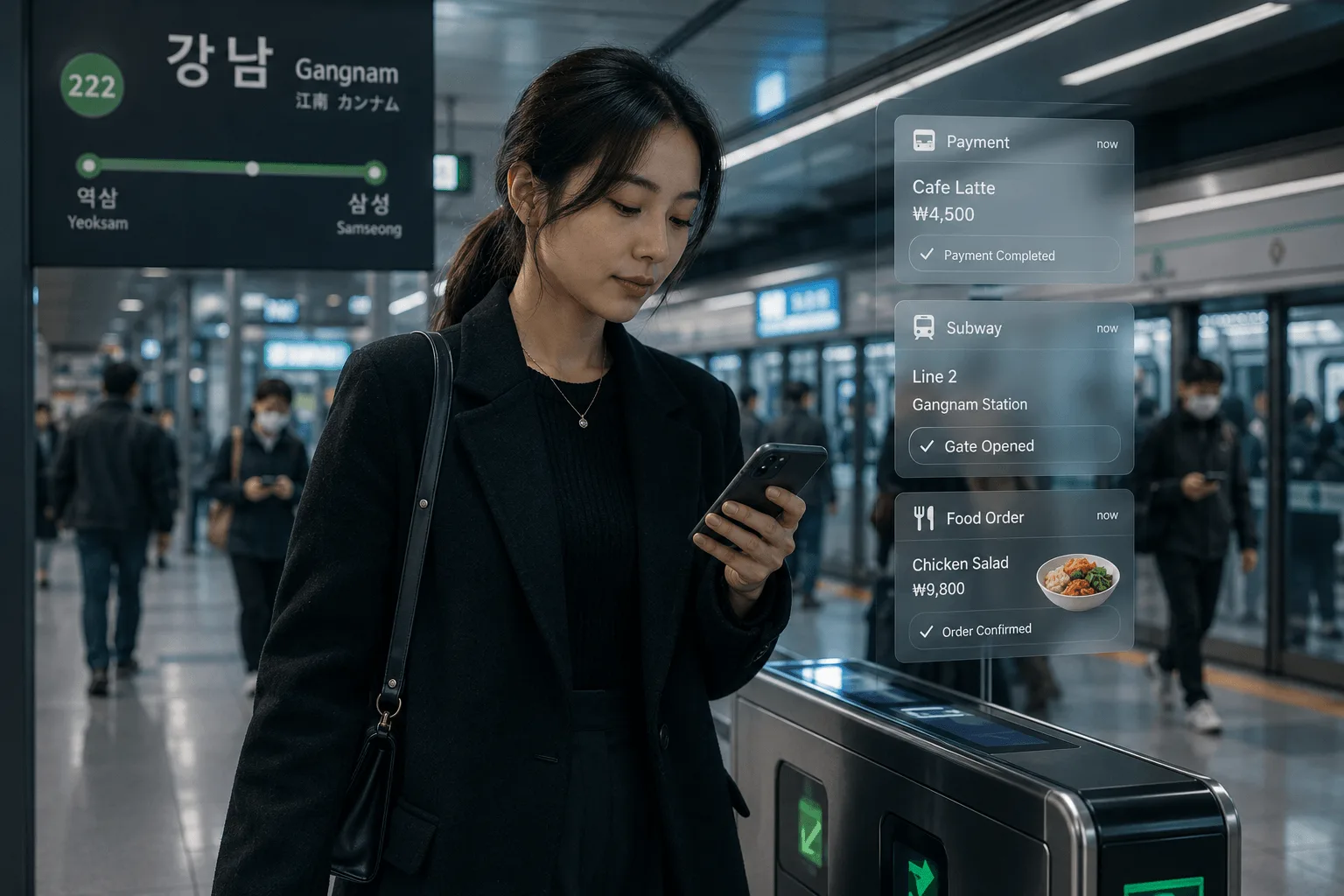
A commuter in Seoul steps off the platform, phone in hand. One tap for coffee, another for the subway gate, dinner ordered before the next stop.
In South Korea, mobile technology does not support daily routines – it is the routine. Many Indonesians watching these trends from Jakarta or Surabaya see a glimpse of what efficient digital living can look like.
South Korea often sets the pace for Asia’s mobile markets, and its patterns frequently shape expectations in places like Indonesia.
How South Korea Became a Mobile Technology Leader?
South Korea built its position through deliberate choices decades ago. The country rolled out nationwide high-speed broadband early, creating a foundation that later supported mobile networks.
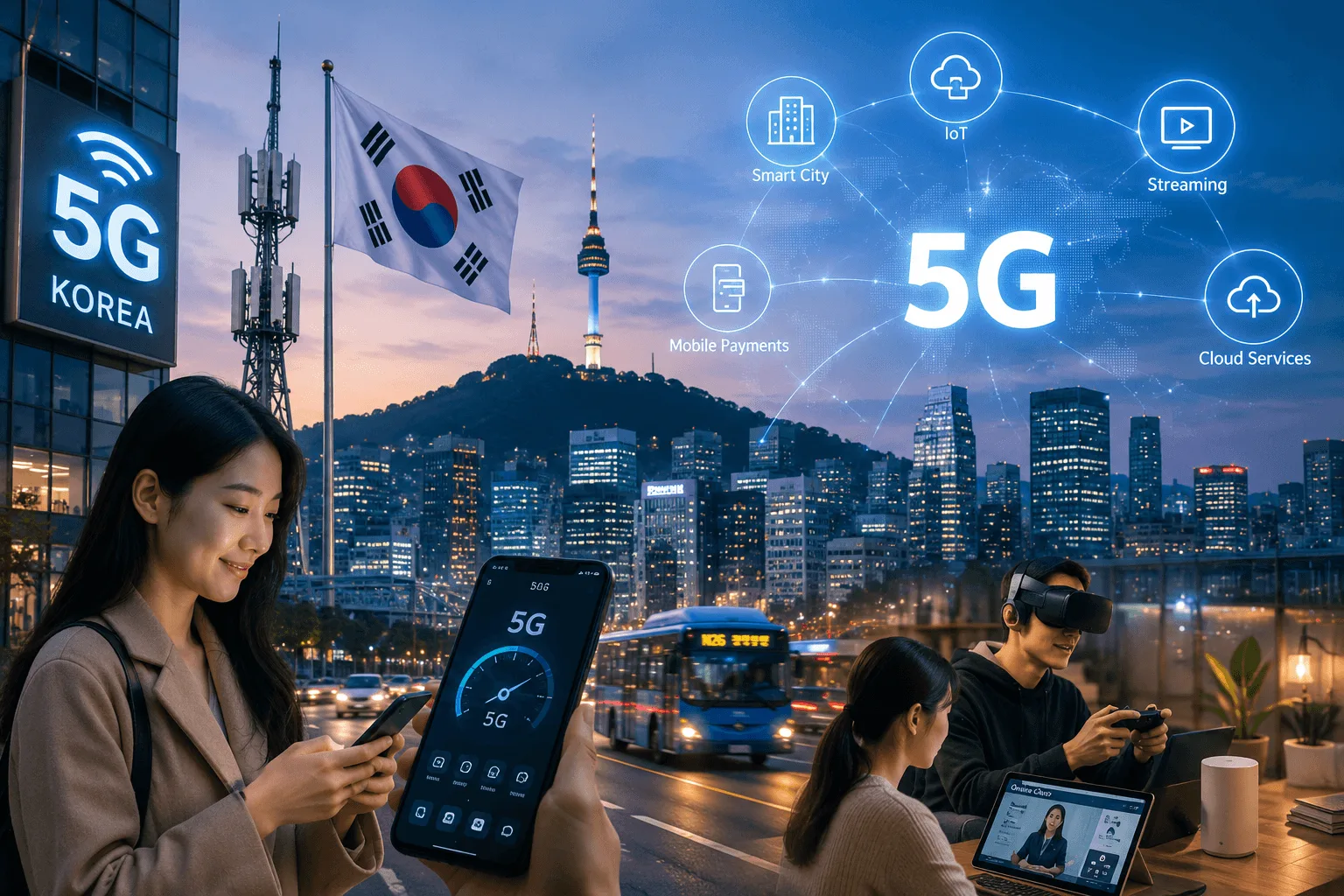
Government and industry worked together to expand 5G coverage to nearly every corner, from bustling Seoul neighborhoods to quieter rural towns.
South Korea was also among the world’s first countries to launch commercial 5G services on a large scale, helping establish the foundation for today’s highly connected mobile ecosystem.
Local companies like Samsung and LG poured resources into hardware, while others focused on software that matched daily needs.
Smartphone penetration reached impressive levels years ahead of many neighbors.South Korea became a benchmark for mobile innovation in Asia precisely because it combined fast networks with practical applications that people actually used.
Mobile Entertainment and Digital Services
Korean phones handle entertainment differently than most markets. Live sports, dramas, and short videos run inside the same ecosystem – users do not switch between five apps to find what they want.
Gaming sessions are designed around commute lengths, not screen sizes. Social features are built into content platforms, not bolted on.
Indonesian users recognize parts of this pattern. Evening streaming and family video calls are standard in Bandung or Medan, but the integration is thinner – content, payments, and social features still live in separate places. Korean platforms close this gap through localization that goes deeper than translation.
The sports betting platform 1xbet korea works on the same principle: Korean payment methods, Korean-language interface, odds formatted for domestic users – built for the market rather than adapted to it.
Why Convenience Matters More Than Features?
Korean apps succeed by removing daily hassles. Super apps combine ride-hailing, payments, and shopping in one interface.
QR codes turn transactions into instant exchanges – vending machines, train gates, street food stalls, online bills, all handled the same way.
Gojek and Grab followed the same logic in Indonesia, evolving from ride services into platforms Indonesians rely on for everything from family transfers to rainy-day meal orders. The principle is the same in both markets: technology works when it disappears into the background.
User Expectations in 2026
Mobile users in Korea and Indonesia have raised the bar in the same direction, though from different starting points. The list of non-negotiables looks similar across both markets:
- Loading speed that holds up on a mid-range device with patchy signal
- Payment flows that complete in two taps, not five
- Recommendations that reflect actual usage, not generic popularity charts
- Login systems that remember who you are across sessions and devices
- Notifications that arrive when relevant, not on a broadcast schedule
The last point is where many platforms still lose users. A Jakarta professional commuting on a packed train has the same tolerance for friction as a Seoul commuter – which is to say, almost none.
The 1xbet korea login addresses this directly: credentials stored, authentication fast, no repeated steps between opening the app and using it.
Comparing Mobile Habits in Korea and Indonesia
Daily mobile patterns reveal both similarities and gaps between the two countries. Koreans often lead in seamless integration, while Indonesians show creativity in adapting tools to local realities like diverse geographies and price sensitivity.
| Category | South Korea | Indonesia |
| Mobile Payments | Near universal QR and wallet use | Growing rapidly with e-wallets |
| Streaming Consumption | High daily hours, premium content | Strong on mobile data, varied tastes |
| Gaming Habits | Competitive and social focus | Casual play with local favorites |
| E-commerce Usage | Fast delivery integration | Price comparison and marketplace mix |
| Super Apps | Deep ecosystem integration | Expanding multi-service platforms |
| Mobile Internet Usage | Consistent high speeds | Increasing but variable by region |
These differences highlight opportunities. Indonesian users blend global trends with local solutions, creating unique digital habits.
What Indonesia Can Learn?
Korea’s super app model did not emerge from design theory – it came from observing that users in Seoul were switching between six different apps to complete one errand. Kakao and Naver collapsed that friction into single platforms.
Indonesia’s Gojek followed the same logic, but the lesson is not yet fully applied across the market. Smaller local platforms still operate in silos where a user pays in one app, tracks delivery in another, and contacts support in a third.
Unlike Seoul, eastern Indonesia runs on inconsistent networks. Apps that treat low-bandwidth performance as an afterthought lose users in Sulawesi before they gain them in Jakarta.
UMKM owners in Solo or Makassar are not waiting for perfect infrastructure. They use what works now – WhatsApp for orders, GoPay for payments, Instagram for discovery. The opportunity is building tools that connect these existing habits rather than asking users to abandon them for something new.
Everyday Technology Done Right
South Korea’s mobile edge was not built on hardware specs or network speeds alone. It came from closing the gap between what technology can do and what people actually need it to do on a Tuesday morning before work.
Indonesia is at a different point on that curve – but moving fast. The infrastructure gaps that defined mobile access five years ago are narrowing.
What comes next depends less on connectivity and more on whether local platforms build around real Indonesian routines the way Korean ones built around Korean ones.
That is the practical lesson – not that Indonesia should copy Seoul, but that the same discipline of building for actual daily use, rather than impressive feature lists, is what separates platforms people rely on from ones they delete after a week.
