


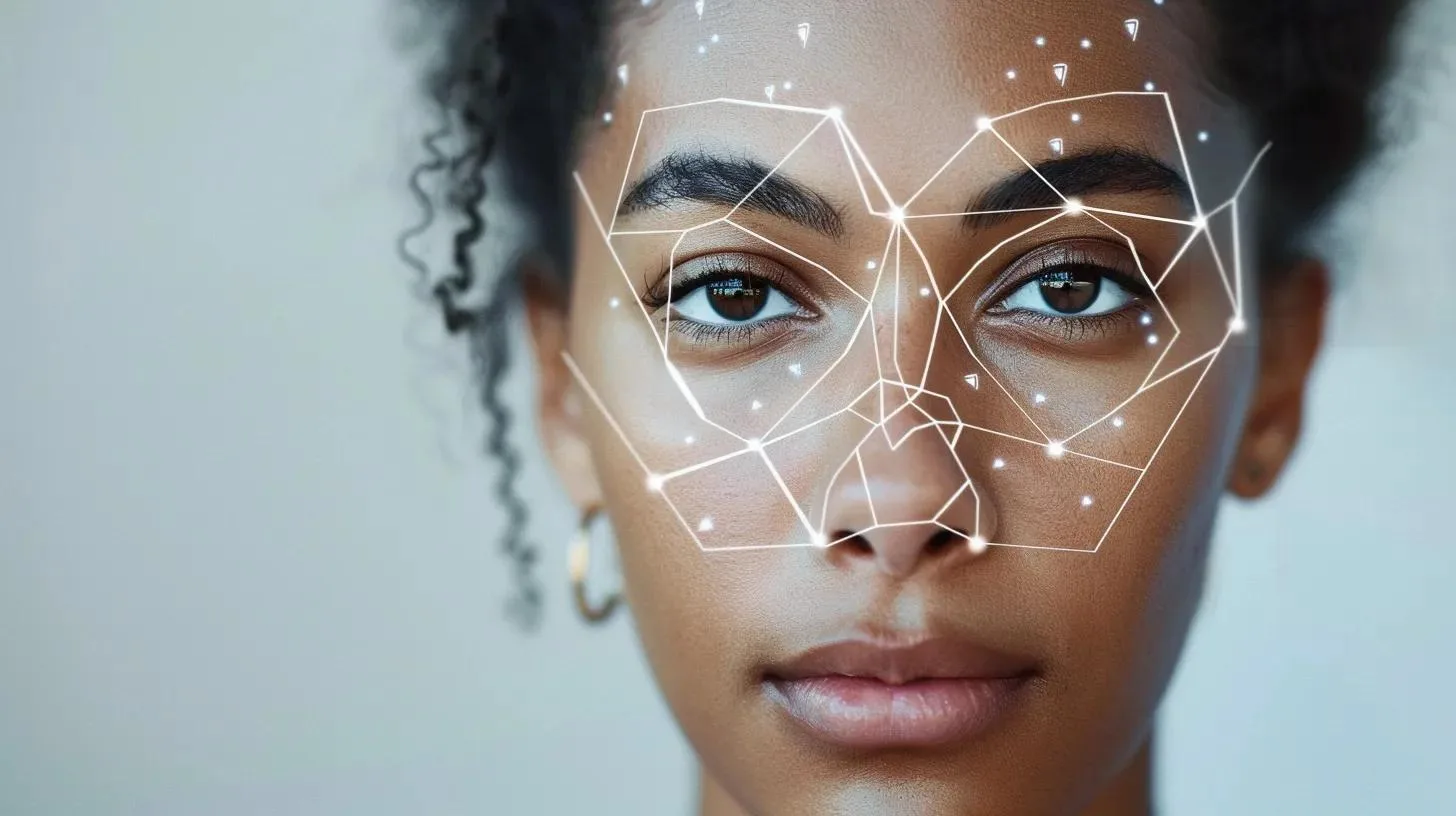
Imagine a security system that can identify a person in a crowd, verify an identity in under a second, or flag a stolen vehicle the moment it passes a camera. None of that happens without a powerful recognition engine at its core.
That engine is typically delivered through a facial recognition SDK – a software development kit that gives developers and enterprises the tools to embed advanced biometric and object recognition capabilities directly into their own applications.
This guide breaks down what a facial recognition SDK does, what to look for when evaluating one, and how these tools are being applied across industries today.
What is a facial recognition SDK?
A recognition SDK (software development kit) is a packaged collection of libraries, APIs, and pre-trained machine learning models that developers can integrate into applications without building biometric algorithms from scratch.
A facial recognition SDK specifically focuses on detecting, enrolling, and matching human faces – but modern SDKs rarely stop there.
Today’s leading SDKs bundle multiple recognition modalities and analytical functions into a single platform, allowing organizations to run face recognition alongside fingerprint recognition, iris recognition, and even tattoo recognition – all through one integration layer.
Core components of a recognition SDK
Most enterprise-grade SDKs include the following functional layers:
| Component | Function |
| Face detection | Locates faces within an image or video frame |
| Face enrollment | Captures a face template for database storage |
| Face matching | Compares a probe image against enrolled templates |
| Liveness detection | Determines whether the subject is a real person or a spoof |
| Age estimation | Infers approximate age from facial features |
| Face analytics | Extracts attributes such as emotion, gaze, and mask status |
| ICAO compliance | Checks passport-quality photos against international standards |
Recognition beyond faces: a multimodal approach
The most capable platforms go well beyond face matching. Here is a look at the recognition types that leading SDKs now support.
Fingerprint recognition
Fingerprint recognition remains one of the most widely deployed biometric methods in the world. When included in an SDK, it allows applications to verify identity against fingerprint databases, often in combination with face data for multi-factor authentication.
Iris recognition
Iris recognition offers extremely high accuracy and is commonly used in high-security environments such as border control and access management.
SDK-based iris recognition enables real-time iris capture and matching from standard cameras or specialized iris scanners.
Tattoo recognition
Tattoo recognition is an emerging modality used primarily in law enforcement. It allows investigators to match tattoo imagery from surveillance footage or booking photos against known databases, significantly expanding the range of identifying features available during an investigation.
Identity verification and age estimation
Identity verification workflows use face matching combined with document analysis to confirm that a person is who they claim to be – a critical function for financial services, healthcare, and e-commerce platforms.
Age estimation adds an additional compliance layer, helping organizations verify that users meet minimum age requirements without collecting unnecessary personal data.
Liveness detection
Liveness is a foundational requirement for any real-world deployment. A system that can be fooled by a photograph or a video replay is not suitable for identity verification.
Liveness detection algorithms analyze micro-movements, depth cues, and texture patterns to distinguish a live person from a spoofed presentation.
Computer vision capabilities: detection beyond biometrics
Many organizations need more than biometric matching. The best recognition platforms now include computer vision capabilities that extend their utility across physical security, retail, and transportation use cases.
Vehicle recognition and ALPR
Automatic License Plate Recognition (ALPR) – sometimes called ANPR – allows systems to read and log vehicle license plates in real time.
Combined with vehicle recognition (make, model, color, and type), this enables powerful applications in parking management, law enforcement, and fleet tracking.
Gun detection and person detection
Gun detection algorithms alert security teams the moment a firearm appears in a camera’s field of view, enabling faster response before an incident escalates.
Person detection is a broader capability that identifies and tracks human presence across camera networks, useful in access control, occupancy monitoring, and perimeter security.
Object detection
Object detection extends recognition to a wide range of items – bags, vehicles, packages, or prohibited items – making it applicable across transportation hubs, event venues, and critical infrastructure.
For teams evaluating how these capabilities can be combined into a production-ready integration, reviewing a dedicated facial recognition SDK page can clarify which modalities are available, what hardware is supported, and how licensing works.
ICAO compliance and international standards
For organizations operating in travel, border control, or civil registration, ICAO (International Civil Aviation Organization) compliance is non-negotiable.
ICAO standards define quality requirements for facial images used in travel documents, including rules around face position, lighting, background, and expression.
An SDK that includes ICAO quality checks ensures that captured images meet these requirements automatically, reducing rejection rates and improving downstream matching accuracy.
What makes a high-quality recognition SDK?
Choosing the right SDK involves more than comparing accuracy benchmarks. Here are the key evaluation criteria:
- Accuracy and speed: Latency matters in live deployments. Look for SDKs benchmarked on independent datasets such as NIST FRVT.
- Platform support: The SDK should run on the operating systems, hardware, and edge devices your deployment requires – Linux, Windows, ARM, and GPU-accelerated environments.
- Scalability: Can the SDK handle a database of millions of identities and still return sub-second matching results?
- Modality breadth: A single SDK that covers multiple recognition types reduces integration overhead significantly.
- Privacy and compliance features: Built-in tools for data minimization, template encryption, and audit logging help organizations meet GDPR, CCPA, and other regulatory requirements.
- Support and documentation: Enterprise deployments require clear technical documentation and responsive vendor support.
ROC.ai: a purpose-built recognition platform
ROC.ai is a biometric technology company focused entirely on recognition, not a company that offers recognition as a side feature of a larger product suite.
Their platform covers face recognition, fingerprint recognition, iris recognition, tattoo recognition, liveness detection, identity verification, age estimation, face analytics, ICAO compliance checking, vehicle recognition, ALPR, gun detection, person detection, and general object detection.
ROC.ai’s algorithms have been independently evaluated through the NIST FRVT program, which is widely considered the most rigorous independent benchmark for face recognition algorithms.
For organizations that need a defense-grade recognition platform with a clean SDK integration path, ROC.ai represents a vendor worth evaluating seriously.
Common deployment environments
Recognition SDKs are not one-size-fits-all solutions. They are deployed across a wide range of environments, including:
- Border control and airports – combining face, iris, and document verification for passenger processing
- Law enforcement – using face, fingerprint, and tattoo recognition together for investigations
- Physical access control – replacing badge-based entry with face or iris-based authentication
- Financial services – powering identity verification and liveness checks for account opening and transactions
- Retail and hospitality – enabling frictionless checkout, loyalty recognition, and age verification
- Smart city infrastructure – integrating person detection, vehicle recognition, and ALPR into city-wide camera networks
FAQs
What is the difference between a facial recognition SDK and a facial recognition API?
An SDK is typically a locally deployed library that runs on your infrastructure, giving you full control over data and latency. An API routes requests to a cloud service. SDKs are generally preferred for high-volume, low-latency, or privacy-sensitive deployments.
Does a facial recognition SDK require a GPU?
Not necessarily. Many SDKs are optimized to run on CPU-only environments or on edge hardware like ARM processors. However, GPU acceleration significantly improves throughput for large-scale video analytics.
How is liveness detection different from face recognition?
Face recognition identifies who someone is by comparing their face to a database. Liveness detection determines whether the face presented is from a real, live person – not a photograph, video, or 3D mask. Both are required for a secure identity verification workflow.
What is ICAO compliance in a facial recognition context?
ICAO (International Civil Aviation Organization) publishes standards for biometric passport photos, including requirements for face position, background, lighting, and expression.
An SDK with ICAO compliance checking automatically validates whether a captured image meets these standards before it is submitted for enrollment or matching.
Can a single SDK handle both face recognition and license plate recognition?
Yes, some platforms are designed to handle multiple recognition types – both biometric and non-biometric – within a single integration.
This reduces engineering complexity and allows organizations to build unified recognition pipelines rather than managing separate vendors for each modality.
