


WealthTech founders often fall into a predictable trap. They believe that building every piece of software internally is the only valid way to protect their intellectual property.
So they spend six months trying to recruit specialized engineers, burn through their runway, and miss critical market windows.
Building a native engineering culture is highly desirable. But treating in-house development as a strict religion will eventually cripple your product roadmap.
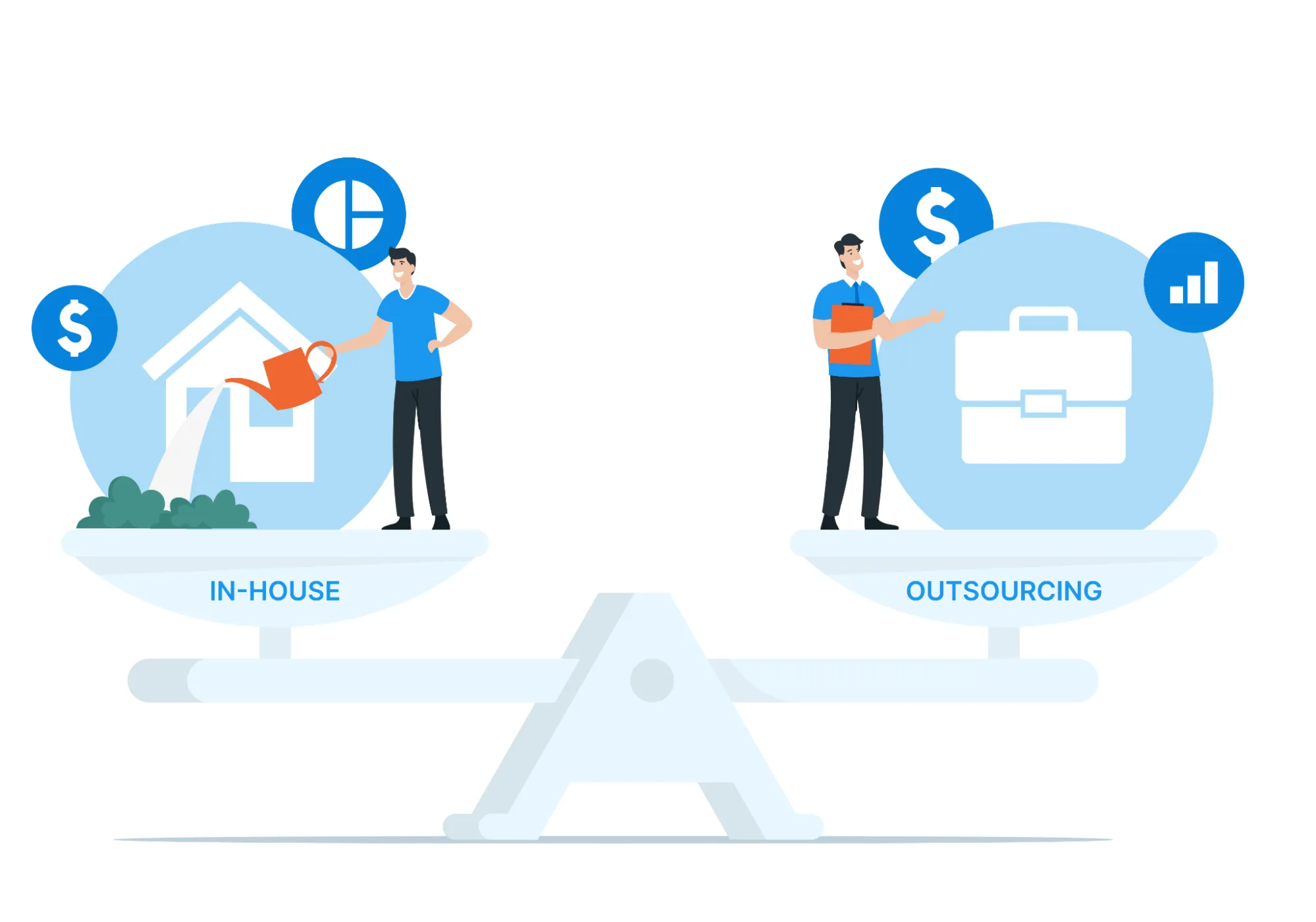
The reality of modern financial technology requires a much more fluid approach to technical resource allocation. Engineering leadership must look beyond traditional hiring methods to keep pace with market demands.
A dogmatic insistence on building everything from scratch limits your velocity and isolates your product from broader industry innovations.
The Hidden Cost of the In-House Obsession
Many engineering leaders pride themselves on maintaining a fully internal team. The logic seems sound on paper. Internal teams possess deep institutional knowledge and align closely with company goals.
But maintaining that team comes with heavy hidden costs that few leaders accurately calculate upfront. Recruitment for niche financial technology skills takes staggering amounts of time.
You are competing against massive financial institutions with bottomless hiring budgets and vast stock option pools.
Finding a backend engineer who understands both complex distributed systems and financial compliance is rare. The search process alone can delay a feature launch by three quarters. Once you finally hire these engineers, retention becomes an immediate threat.
A stagnant internal project can easily bore top-tier talent. They want to solve complex problems, not maintain legacy code indefinitely.
When they inevitably leave, they take that institutional knowledge out the door with them. Relying solely on internal hires severely limits your ability to scale resources up or down based on immediate project demands.
Your payroll becomes a massive fixed cost that cannot adjust to seasonal development cycles or sudden market shifts.
Finding Alignment with Specialized External Talent
There is a distinct difference between blindly outsourcing your core product and strategically augmenting your technical capabilities. The former is dangerous. The latter is a business necessity. You should keep product vision and core architecture strictly internal.
But complex integrations, regulatory reporting engines, and secondary feature development are prime candidates for external support.
Building a robust wealth management platform requires connecting to dozens of external APIs, banking gateways, and market data feeds. These integrations are technically tedious but absolutely necessary. This is where external teams excel.
You can offload the heavy lifting of backend plumbing while your internal leaders focus on user experience and proprietary algorithms.
When you decide to augment an internal engineering team, strict vetting criteria are absolutely vital. You cannot afford to hand critical financial infrastructure over to generalist coders who learn on your dime. Security and regulatory compliance must be native to the external team.
Finding the best fintech software development company requires looking for deep domain expertise rather than just a low hourly rate. They need to understand financial protocols, ledger mechanics, and data security frameworks before they write a single line of code.
Escaping the Giant IT Vendor Trap
Many wealth management platforms make the mistake of partnering with massive global IT vendors. These giant outsourcing factories sell you on their thousands of available engineers. But their actual delivery model is fundamentally flawed for agile financial products.
They typically assign a senior architect to sell you the contract, then staff your project with junior developers to maximize their own profit margins. The code quality inevitably suffers.
You end up paying for bloated management structures and endless administrative overhead. Communication slows to a crawl through layers of account managers, project coordinators, and technical liaisons.
When a critical bug hits production, you are forced to wait for your ticket to move through their massive corporate bureaucracy. You lose the exact agility you were trying to buy.
A far better strategy for handling niche financial platforms is partnering with a boutique software company that offers direct access to the people actually writing your code. Smaller, specialized firms prioritize long-term technical health over billing maximum hours.
They communicate faster, pivot quickly when market demands shift, and provide a level of personalized attention that giant vendors simply cannot match. You want partners who care about your product architecture, not just logging hours on a timesheet.

Structuring a Hybrid Resource Allocation Model
The most successful engineering organizations operate on a hybrid allocation model. They treat external talent as an elastic extension of their internal workforce.
This requires strict structural discipline. Your internal lead engineers must define coding standards, security protocols, and deployment pipelines. The external team then operates within these strict guardrails.
This model prevents knowledge silos and keeps your technical debt manageable. You must require external developers to document their work thoroughly and participate in regular code reviews alongside your internal staff. The goal is seamless integration. The code should look indistinguishable regardless of who wrote it.
If your internal team views external developers as a threat or a nuisance, the hybrid model will fail completely.
Leadership must frame the external team as a tool that frees internal engineers to focus on high-value, creative problem solving. Regular cross-team meetings can help build trust and set clear expectations for both sides.
Writing Contracts That Demand Accountability
How you structure your vendor agreements directly impacts the quality of the software delivered. Traditional time and materials contracts often misalign incentives. The vendor gets paid more if the project takes longer, which encourages slow development cycles.
Fixed-price contracts are equally problematic for agile development because they punish scope changes and force teams to cut corners to meet arbitrary deadlines.
You need to find a middle ground that protects both parties and prioritizes quality. Consider structuring contracts around specific deliverables or sprint outcomes.
Tie financial incentives to code quality metrics, defect rates, and successful deployment milestones. If a vendor consistently delivers bug-free code ahead of schedule, they should be rewarded for their efficiency.
Most importantly, your contract must explicitly state that your organization retains full ownership of all code, intellectual property, and architectural diagrams at all times. Never let an external vendor hold your repository hostage. You must control the source code from day one.
Building a Resilient Engineering Machine
Technical resource allocation is not a binary choice between hiring employees and outsourcing tasks. It is an ongoing strategic balancing act. WealthTech platforms that scale successfully treat their engineering capabilities like an investment portfolio.
They diversify their risk by relying on multiple talent streams rather than putting all their faith in a single hiring channel.
You should build a solid core of internal engineering leadership. Then use highly specialized external partners to execute specific technical objectives at high speed.
This approach protects your budget, maintains product quality, and prevents your roadmap from stalling due to hiring bottlenecks.
Flexibility is the ultimate competitive advantage in financial software development. By blending internal vision with external execution, you build a product that can actually survive long enough to dominate the market.
FAQs
Why is hiring in-house software engineers so difficult in WealthTech?
Financial technology requires developers who understand complex distributed systems, strict security protocols, and heavy regulatory compliance. The talent pool for these specific skills is incredibly small. Startups must compete directly with massive banks that offer significantly higher salaries and better benefits.
Should early-stage WealthTech startups outsource their MVP?
It depends heavily on the core value proposition of the product. If the intellectual property lies in the underlying algorithm, that should remain in-house. However, standard infrastructure like user interfaces, basic integrations, and administrative dashboards are excellent candidates for external development.
How do you protect intellectual property when working with external teams?
You must establish clear legal boundaries before development begins. This includes strict non-disclosure agreements and contracts that explicitly grant your company full ownership of all source code. You should also restrict external access to only the specific repositories they need to perform their work.
What is the main difference between staff augmentation and dedicated teams?
Staff augmentation involves hiring individual external engineers to fill specific skill gaps within your existing internal team. A dedicated team operates as a complete, self-managed unit that takes ownership of an entire project or feature set from start to finish.
How can a company transition from an outsourced team to an in-house team?
The transition must happen gradually to prevent technical disruptions. Start by hiring internal technical leads to shadow the external team and review their code. Slowly shift maintenance responsibilities inward before taking full ownership of new feature development.
