


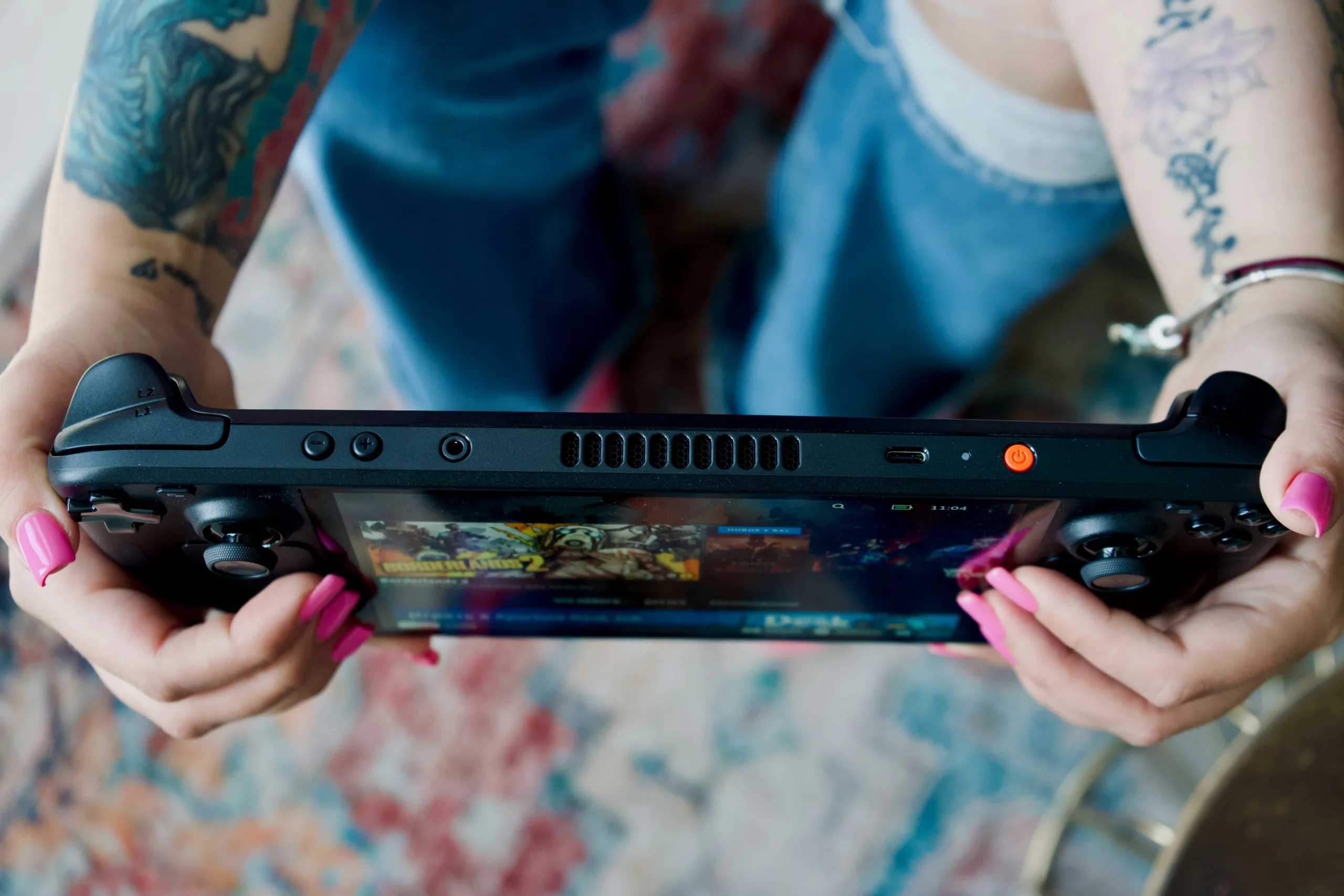
Gaming is no longer dominated by high-end desktops and gaming rigs like a decade ago, thanks to the rise of lightweight devices like Chromebooks, tablets, and even smartphones. These lightweight devices can now handle games that were once thought possible only on dedicated gaming rigs.
The changing landscape
A few years ago, if you suggested to gamers that a lightweight device like the ones mentioned above would be considered serious online gaming machines years down the line, many of them would have laughed at you.
Gaming rigs with expensive, power-hungry hardware were gatekeeping the industry, and gamers without this equipment were locked out of playing the latest titles.
Now, the ecosystem has adapted around them, and a growing number of players can now use these lightweight devices that were not even considered gaming hardware just a couple of years back.
For a device to be considered lightweight in the context of gaming, it usually meets one of three criteria: low system specifications, low cost, or high portability.
Some lightweight devices can hit the trifecta of all three things. But what changed for these devices to rise that fast in the online gaming ecosystem? And how is it affecting how and where we play?
Cloud gaming is the great equalizer
The biggest catalyst for this massive change is cloud gaming going mainstream, with services like GeForce by Nvidia, Xbox Cloud Gaming, and Luna by Amazon removing the bottleneck that expensive hardware had on online gaming.
These cloud gaming services made it possible for the heavy workloads of gaming, such as rendering complex graphics, to be handled by massive server farms rather than your local CPU or GPU.
The implications for the average user are that a tablet with just 4GB of RAM can run titles like Halo Infinite or Forza Horizon 5 without any glitches.
The only two things your lightweight device needs are to decode a video stream and communicate with the servers with minimal latency. If your device can stream 1080P video and you have a stable Wi-Fi connection, it can run the latest titles with the clarity and smoothness of a $2,000 gaming rig.
So lucrative is this market that we are seeing Google partner with PC manufacturers like Acer, Asus, and Lenovo to release cloud-gaming Chromebooks.
These devices are gaming-specific and usually skip the pricey internal graphics card in favor of cloud gaming specifications like high refresh rates, Wi-Fi 6E for stable connections, and special RGB keyboards.
NVIDIA CEO Jensen Huang, in his keynote address at GTC 2026, said that we have reached a point where not every pixel has to be computed locally.
He added, “In the future, it is very likely that we’ll do more and more computation on fewer and fewer pixels. We use AI to infer what must be around it… the future is neural rendering.”
Browser-based games enter the chat
Although cloud gaming did the heavy lifting, it was not the only factor at play. Today, a good share of online gaming runs in browsers.
Many casino and card games platforms are browser-native and run on any device with a modern browser and a stable internet connection.
This was not always the case. It points to a quiet revolution in browser games, as gaming enthusiasts remember the uproar and the scepticism in the niche after Adobe officially pulled the plug on Flash.
What was heralded as the death of mobile gaming ended up sparking its renaissance as the industry universally adopted HTML5 and powerful rendering APIs such as WebGL and WebGPU.
This elevated browsers from rendering just text and images to rendering 3D multiplayer environments in real time by tapping directly into the hardware of the devices they run on.
This technological leap also prompted developers to optimize their games for the web, and in the process reach more people with entry-level devices.
Mobile gaming remains the king of the lightweights
Smartphones remain the dominant player in the lightweight gaming devices category, with mobile gaming accounting for more than half of all gaming revenue worldwide.
Smartphones have powerful processors nowadays, and players can just visit a website reviewing the best games to play on their devices at the click of a button.
The future of gaming is quite interesting because, over the last year, different ecosystems have begun to converge, with the device hierarchy flattening. Titles like Fortnite and Minecraft can be played among different players and on different devices.
A player using an Android phone can join a session with another player on a PC or a console. This convergence has also pushed developers to optimize games to capture the mobile audience.
