


Chromebooks have spent years shaking off the reputation of being underpowered productivity machines. In 2026, that reputation is increasingly hard to defend. The combination of improved hardware, a maturing Chrome OS platform, and the explosive growth of browser-based gaming has quietly repositioned Chromebooks as genuinely capable gaming devices — at least for a wide and growing category of titles.
This shift hasn’t come from a single breakthrough announcement. It’s accumulated through incremental hardware improvements, smarter memory management in recent Chrome OS releases, and a gaming ecosystem that has steadily migrated toward the browser as its primary delivery mechanism. For users who don’t need a dedicated GPU for AAA titles, a modern Chromebook increasingly checks every box.
Chrome OS Hardware Now Handles Browser Gaming Well
Modern mid-range and premium Chromebooks ship with processors that would have been considered performance-tier just three years ago. Devices powered by Intel Core i5 and i7 chips, as well as newer ARM-based options like the MediaTek Kompanio series, deliver smooth performance for the vast majority of browser-rendered content. Paired with 8GB or 16GB of RAM — now standard across most consumer-facing models — these machines handle JavaScript-heavy applications without the stuttering that plagued earlier generations.
Chrome OS itself has evolved significantly. Background tab throttling, improved GPU compositing, and better memory allocation mean the browser environment wastes fewer resources on idle processes. For gaming specifically, this translates into faster load times, more consistent frame rates in canvas-rendered games, and noticeably lower latency in interactive browser applications. The platform has become leaner without sacrificing compatibility.
Which Game Categories Run Best on Chromebooks
Strategy games, puzzle titles, idle games, and card-based formats all run exceptionally well on Chromebooks through the browser. iGaming sits comfortably in this group too — best offshore casinos for 2026 are built around fast registration, quick transactions, and interactive design that loads cleanly in any Chrome OS browser. These genres rely on DOM rendering, CSS animations, and JavaScript logic rather than hardware-intensive 3D pipelines, making them a natural fit for Chrome OS architecture. Titles built on HTML5 perform particularly well, with load times that often outpace equivalent native apps on other platforms.
The broader browser gaming market has grown substantially, driven by improved web standards and the widespread adoption of WebGL and WebAssembly. According to a 2024 WebAssembly usage report, WebAssembly adoption among production applications has grown year over year, enabling near-native execution speeds inside browsers — a development that directly benefits Chromebook users running compute-intensive games without native app support.
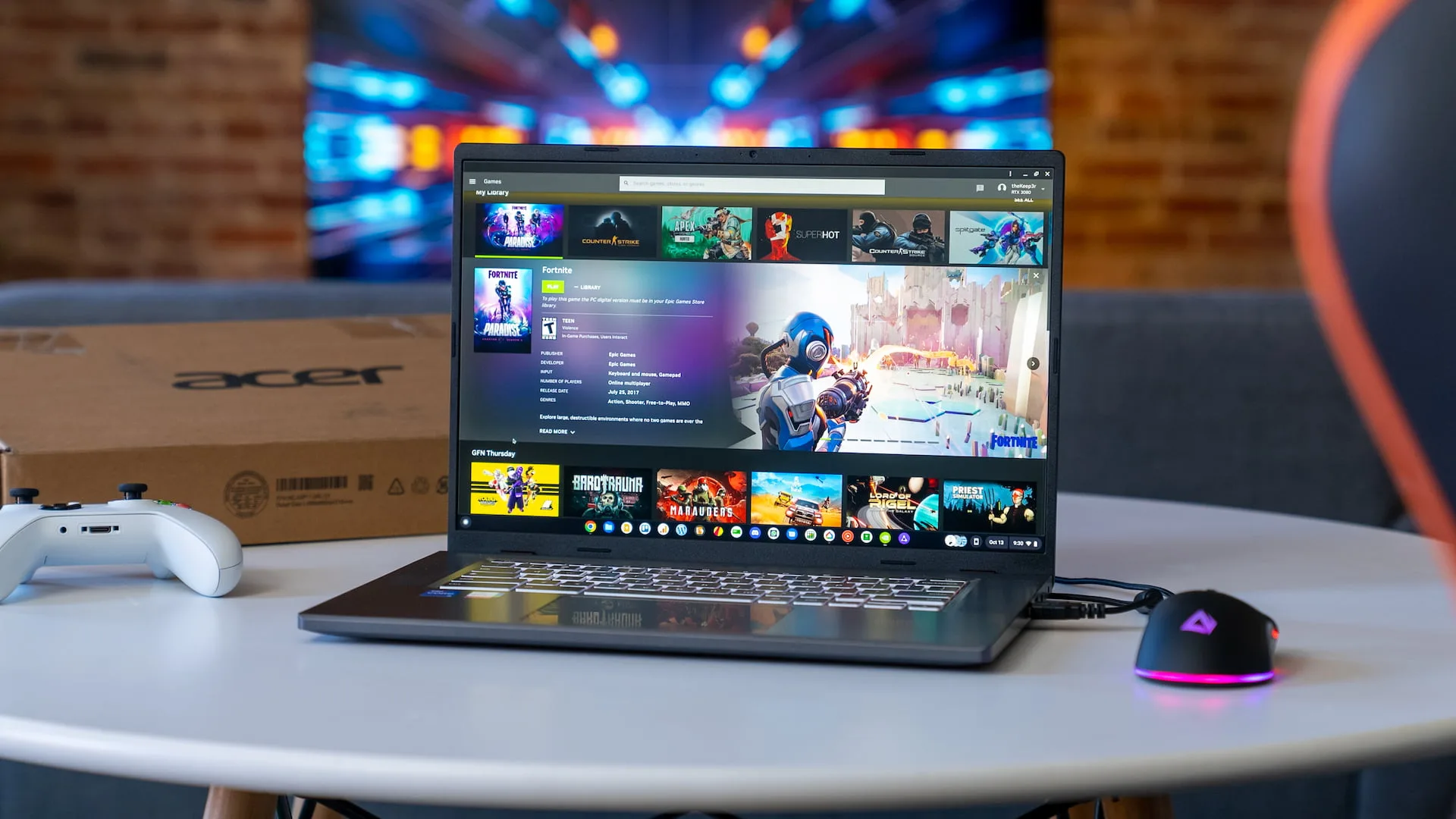
Cloud gaming services have added another layer of accessibility. Platforms like NVIDIA GeForce NOW and Xbox Cloud Gaming run entirely in the browser and have been explicitly optimized for Chromebook use. This means even graphically demanding titles are becoming accessible on Chrome OS, not through native installation but through streamed browser sessions. The hardware ceiling for Chromebook gaming is effectively being raised from the cloud rather than from the device itself.
Chromebook Gaming Performance Gaps That Still Exist
Despite real progress, meaningful limitations remain. Chromebooks without dedicated graphics hardware still struggle with WebGL-intensive titles that push polygon counts or require complex shader operations in real time. Browser-based 3D games that perform seamlessly on a Windows machine with a discrete GPU can feel choppy or unresponsive on even high-end Chromebook configurations, simply because integrated graphics have architectural constraints that software optimization can’t fully overcome.
Latency in cloud gaming sessions also remains sensitive to network conditions in ways that native gaming is not. According to research from the Broadband Forum, consistent low-latency connectivity is a prerequisite for acceptable cloud gaming experiences — something that varies considerably by location and ISP infrastructure. For users in areas with limited broadband quality, this dependency is a genuine obstacle. Chromebooks excel most where the game lives entirely in the browser rather than being streamed from a remote server, and that distinction still matters in 2026.
