


The whole Chromebook thesis, going back to 2011, was a bet that every piece of software you actually need would eventually become a URL.
Mostly, that bet has paid off: design moved to Figma, documents moved to Docs, photo editing moved to half a dozen web apps that would have been unthinkable a decade ago. But the clearest sign the web won isn’t the big-name migrations — it’s the long tail.
It’s the moment when even the weirdly specific tools, the kind that used to ship as $30 Windows shareware, show up as free, well-built browser pages.
Here is a perfect specimen: a tax calculator for gambling winnings.
A web tool for a problem you may not know exists
Jackpot Sounds’ gambling winnings tax calculator does exactly one job. You pick your filing status and your state, enter your adjusted gross income and your winnings, choose standard or itemized deduction — there’s even a checkbox for the 65-plus and blind exemptions — and it estimates what the IRS and your state will want, then shows what actually stays in your pocket. Progressive federal brackets, state-specific rates and exemptions, all handled in the background.
No download, no install, no spreadsheet template from a forum thread. It runs the same on a $250 Chromebook as on anything else, which is rather the point: the machine stopped mattering; the tab is the software.
Why this tool exists: four states built a legal industry?
The reason someone bothered to build this is a quiet piece of American news-in-progress. New Jersey, Pennsylvania, West Virginia and Michigan all run fully legal, state-regulated online casino markets — real licensed operators like Borgata Casino in New Jersey or BetRivers Casino in Pennsylvania, overseen by bodies such as the Pennsylvania Gaming Control Board, with mandatory age verification at 21+.
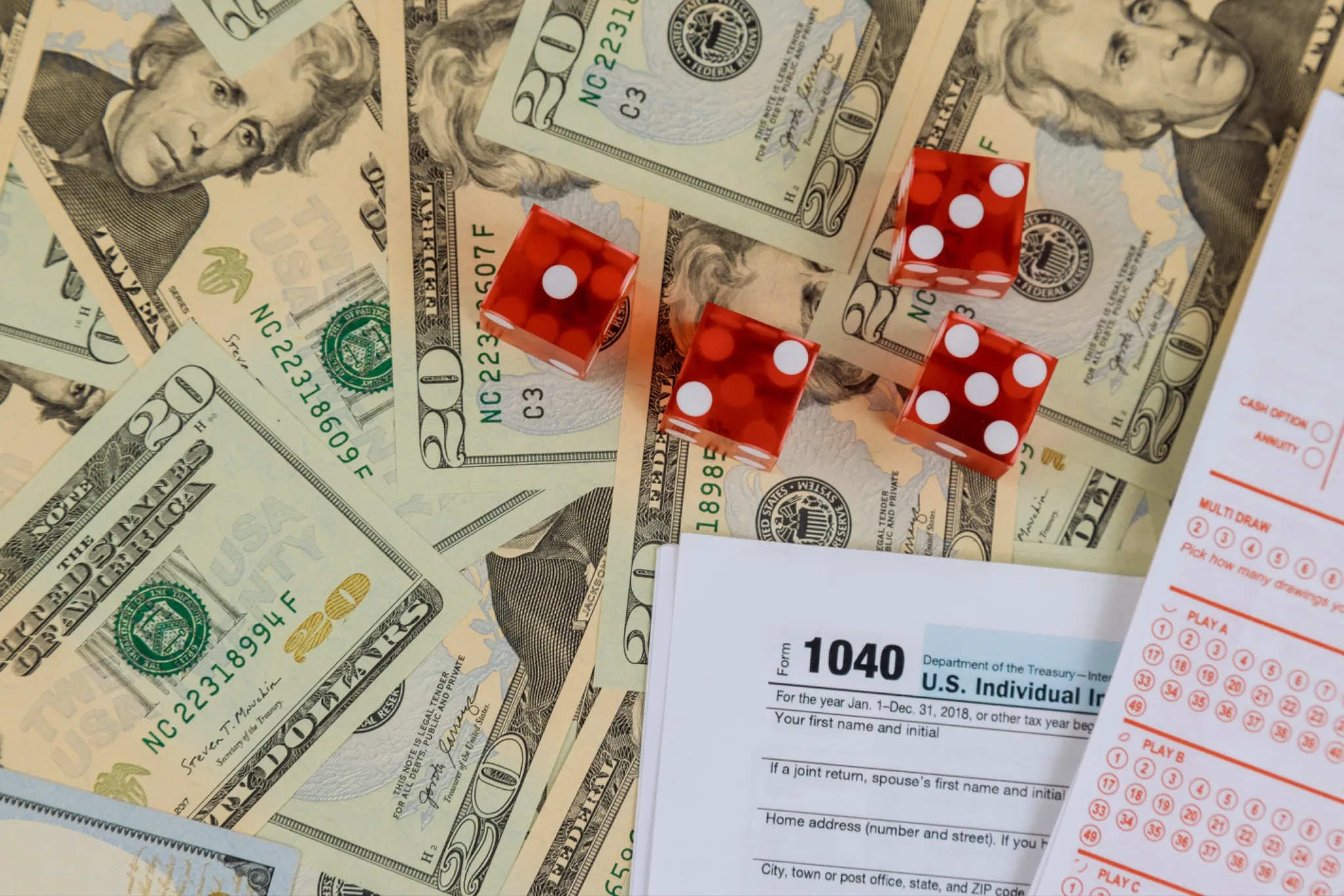
And legal means taxable. The IRS treats gambling winnings as ordinary income: casinos issue a Form W-2G for larger wins — a slot payout of $1,200 or more triggers one — and a flat 24% federal withholding can be taken off the top of big payouts before the money even lands.
Then your state takes its cut. That is precisely the math the calculator automates, because doing it by hand across four different state systems is nobody’s idea of an evening.
What each side actually pays?
The under-reported half of the story: in a legal market, the player is not the only one paying. Operators hand over a share of their gross gaming revenue that would make most industries faint. Roughly, the four states line up like this:
| State | Player pays (state income tax on winnings) | Operator pays (tax on online casino revenue) |
|---|---|---|
| New Jersey | Progressive, by income bracket | ~15% of gross gaming revenue |
| Pennsylvania | Flat 3.07% | 54% on online slots, 16% on online table games |
| West Virginia | Progressive, 2.2%–4.82% | 15% of interactive gaming revenue |
| Michigan | Flat 4.25% | Graduated ~20–28% of gaming revenue |
Yes, Pennsylvania really does take more than half of every dollar an online slot earns. That is the bargain behind legalization: states admit the industry exists, then make it fund schools, pension systems and problem-gambling programs.
In 2024 alone, these markets moved billions in taxed, audited, regulator-visible revenue — money that in the offshore era simply vanished into the grey.
Which is the real difference a Chromebook reader can appreciate: a legal market is a transparent system. Licensed operators, published tax rates, wins that arrive with paperwork — versus offshore sites where neither the player’s win nor the operator’s revenue officially exists anywhere.
The fine print, in the spirit of fine print
Two honest caveats. First, the calculator is an estimator, not an accountant — it won’t model local levies, credits or the withholding a specific casino applies, and its own disclaimer says as much. For a five-figure W-2G year, a human professional is still the right tool.
Second, and more importantly: if you ever find yourself needing gambling tax math, keep the order of operations straight.
Gambling is an entertainment expense that occasionally, statistically rarely, refunds itself — never an income plan.
The four legal states require operators to offer deposit limits and self-exclusion for a reason, and 1-800-GAMBLER exists for the moments when the fun stops being fun.
But as a piece of web-platform trivia? A niche, state-aware, legally literate tax tool, free, running entirely in a browser tab — that is the 2011 Chromebook pitch, fully delivered. The software world really did become a collection of URLs. Even the taxman’s corner of it.
