


Chrome OS 88 introduces a native device diagnostics tool that lets you monitor your Chromebook’s performance without third-party extensions. This built-in feature tracks CPU usage, memory consumption, and battery health in real time.
You can access detailed information about system resources, run performance tests, and check battery cycle counts. This matters when you need to troubleshoot performance issues or assess your device’s health before selling it.
The diagnostics app remains experimental but offers a convenient alternative to extensions like Cog System Info Viewer. It consolidates system information in one place, making it easier to monitor your Chromebook’s performance.
Chrome OS 88 adds native device performance monitoring to Chromebooks. Here’s how to use it.
The diagnostics feature lives behind an experimental flag in Chrome OS 88. You need to enable it manually before accessing the monitoring tools.
Chrome OS development continues to add native features that eliminate the need for extensions. The diagnostics app represents this shift toward built-in system management tools.
Enable the Diagnostics Flag
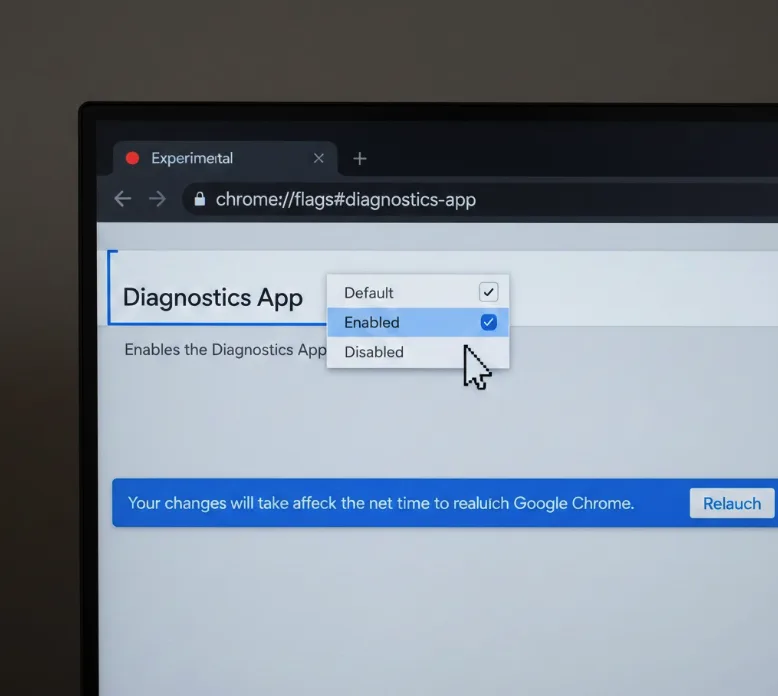
Open a new tab and navigate to chrome://flags#diagnostics-app in your browser’s address bar. This takes you directly to the experimental feature settings.
Find the diagnostics app option and change the dropdown menu from “Default” to “Enabled.” The flag activates the hidden feature.
Restart Your Browser
Chrome OS prompts you to restart after enabling the flag. Click the blue “Restart” button that appears at the bottom of your screen.
Your Chromebook closes all open windows and relaunches the browser. This completes the activation process.
Launch the Diagnostics App
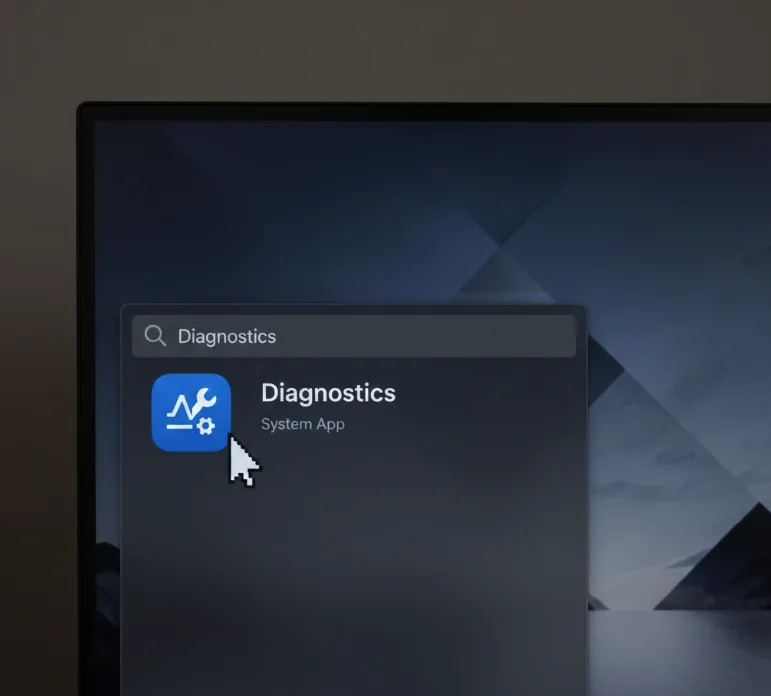
Open your app launcher by clicking the circle icon in the bottom-left corner of your screen. You can also press the Search key on your keyboard.
Type “Diagnostics” in the search bar. The new app appears in your results with a system monitoring icon.
Click the Diagnostics app to open it.
Monitor System Resources
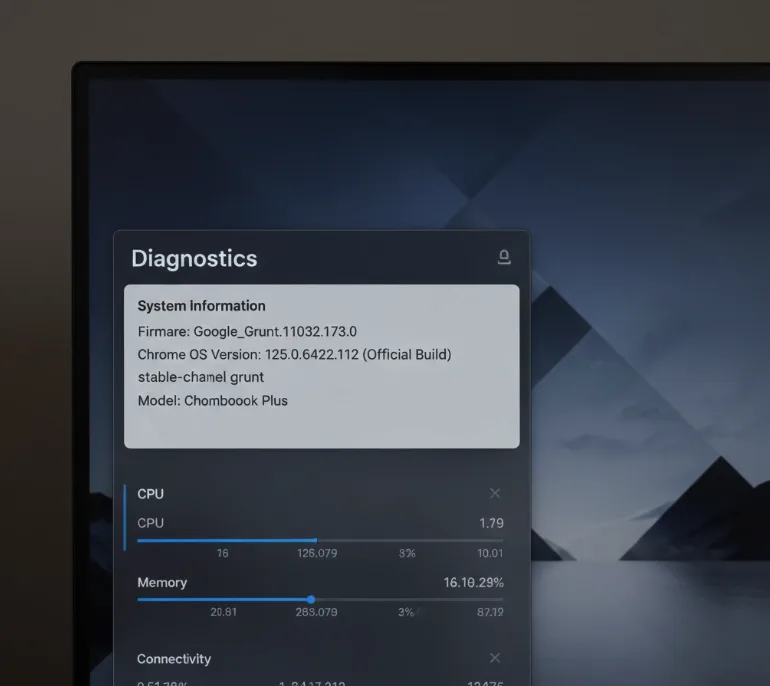
The main screen displays three categories of information: CPU, memory, and battery. Each section shows current usage levels and performance metrics.
You can view your processor name, total installed RAM, and battery cycle count. The battery cycles indicate how many complete charge-discharge cycles your device has completed.
Higher cycle counts mean your battery has degraded more over time. This information helps when selling your Chromebook or planning a replacement.
View System Information
The top section of the app shows your device’s firmware name and Chrome OS version. You can verify which hardware model you own and check if you’re running the latest software.
The interface displays technical specifications without requiring you to dig through settings menus. Everything appears in a single, organized dashboard.
Run Performance Tests
The diagnostics app includes buttons to run CPU and memory tests. Click either option to start a diagnostic scan of your system.
These tests remain under development and may not produce detailed results yet. Google continues improving the testing functionality in future Chrome OS updates.
FAQs
What is the diagnostics app in Chrome OS 88?
The diagnostics app is a native performance monitoring tool that tracks CPU usage, memory consumption, and battery health without requiring third-party extensions or additional software installations.
Do I need to uninstall Cog System Info Viewer?
You can keep Cog System Info Viewer installed alongside the diagnostics app. The native tool remains experimental, so maintaining your existing monitoring solution provides a backup option.
How do I check my Chromebook’s battery cycle count?
Open the diagnostics app and look at the battery section. The cycle count appears with other battery information, showing total charge-discharge cycles your device has completed.
Can I use the diagnostics app on older Chromebooks?
The diagnostics app requires Chrome OS 88 or newer. Older Chromebooks that cannot update to this version need third-party extensions like Cog for performance monitoring.
Why don’t the CPU and memory tests show results?
The testing features remain under active development by Google. Future Chrome OS updates will add more detailed diagnostic outputs and improved testing functionality to the app.
