


These days, having a solid virtual learning and training system is no longer optional — it’s expected by educational institutions and corporate L&D departments alike.
Organizations want development partners capable of creating platforms with stable architecture, good integration capabilities, and results that can actually be measured. This has become the basic standard.
In this article, we’ve evaluated seven EdTech development companies using the same testing approach. The focus stayed on technical strength, feature quality, and implementation reliability to give you a practical foundation for choosing the right partner.
What EdTech Development Means?
EdTech development means building software for education and training. It’s more complex than regular app development because you’re serving students, teachers, administrators, and parents—all while meeting strict data privacy and accessibility rules.
Typical examples include:
- Learning management systems
- Student information systems
- Virtual classrooms
- Assessment tools
- Corporate training platforms
Many now add AI features like adaptive learning, automated grading, and personalized recommendations.
Schools use these for online and hybrid programs, companies for staff training and compliance, and startups for language learning or test prep.
Ultimately, the key factors are secure data handling, smooth system integration, and interfaces that work well for users with different technical abilities.
Top Trusted EdTech Development Companies
When it comes to building learning platforms, who you choose as a partner really matters. Whether your focus is education, corporate training, or a new business, these companies have the experience in custom e-learning solutions, LMS, and emerging EdTech.
1. Lionwood
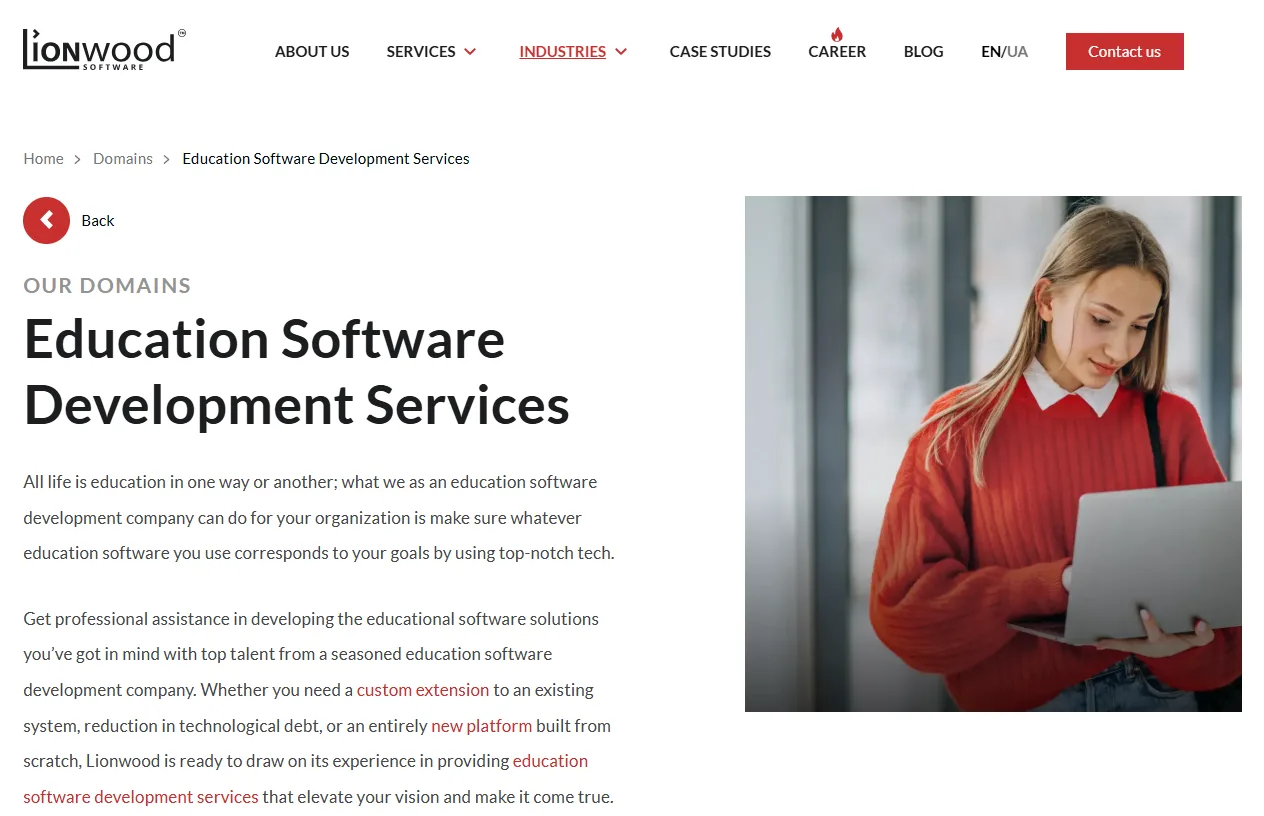
Lionwood EdTech software development provider creates custom solutions for both corporate training programs and formal education institutions.
The team focuses on building platforms from the ground up, extending existing systems, and cleaning up technical debt.
What stands out is their strong emphasis on integration with the rest of an organization’s infrastructure. This approach works well whether the project involves public school systems or corporate e-learning environments.
Drawing from years of experience in governmental and commercial projects, Lionwood creates platforms that are scalable, easy to use, and tailored to meet exact educational or training needs.
Key Services:
- LMS and E-learning software development
- School software development
- Educational testing services
- AI integration for EdTech
- Legacy system updates and migrations
- Custom feature development for existing platforms
2. N-iX
N-iX has been doing engineering work for over two decades, with more than eleven of those years spent specifically in the EdTech space.
They build large-scale platforms—think learning management systems, student information systems, and corporate training solutions. Their skill set includes cloud-native backend work, data analytics, AI-driven personalization, and immersive tech like VR and AR.
Clients can choose from a number of engagement alternatives, including as staff augmentation, managed teams, and full bespoke development. N-iX also works directly with AWS, GCP, and Microsoft Azure to provide scalable and reliable deployments.
Key Services:
- LMS, SIS, and custom educational application development
- E-learning platform development
- Instructional management platforms
- Corporate learning solutions
- VR and AR applications for training
- Skills measurement and gamification solutions
- Data analytics and AI integration for adaptive learning
3. SoftServe
SoftServe is a large edtech development company with offices across North America, Europe, and the Middle East.
The firm focuses on people management in education, student transformation, and digital enablement. Their edtech practice develops solutions for both higher education institutions and K–12 schools.
They closely monitor analytics, accessibility, and the application of AI and machine learning to improve classroom instruction as well as general administrative procedures.
In order to promote digital transformation, they also assist colleges and institutions with cloud migration and infrastructure upgrades.
Key Services:
- K-12 and higher education transformation solutions
- Cloud migration and infrastructure modernization
- Analytics-driven insights for institutional operations
- AI and machine learning integration
- Accessibility-focused educational platforms
- Talent management systems
- Digital enablement for classrooms
4. Infosys
Infosys delivers edtech services for schools and universities with delivery centers in the Americas, Europe, APAC, the Middle East, and Africa.
They create software designed to simplify workflows for students, teachers, parents, and administrators. Their technical capabilities include blockchain, data analytics, IoT, applied AI, and application modernization.
The company applies Design Thinking, Agile, and DevOps to build solutions that cover the whole education journey — from enrollment to employment. They also use their own AI and machine learning platforms to automate key learning and administrative processes
Key Services:
- Student and faculty workflow management software
- Enrollment to employment digital solutions
- AI and machine learning integration via proprietary platforms
- Application modernization
- Blockchain, IoT, and data analytics for education
- Immersive content delivery and personalized learning pathways
- Design Thinking and Agile-based application development
5. Intellias
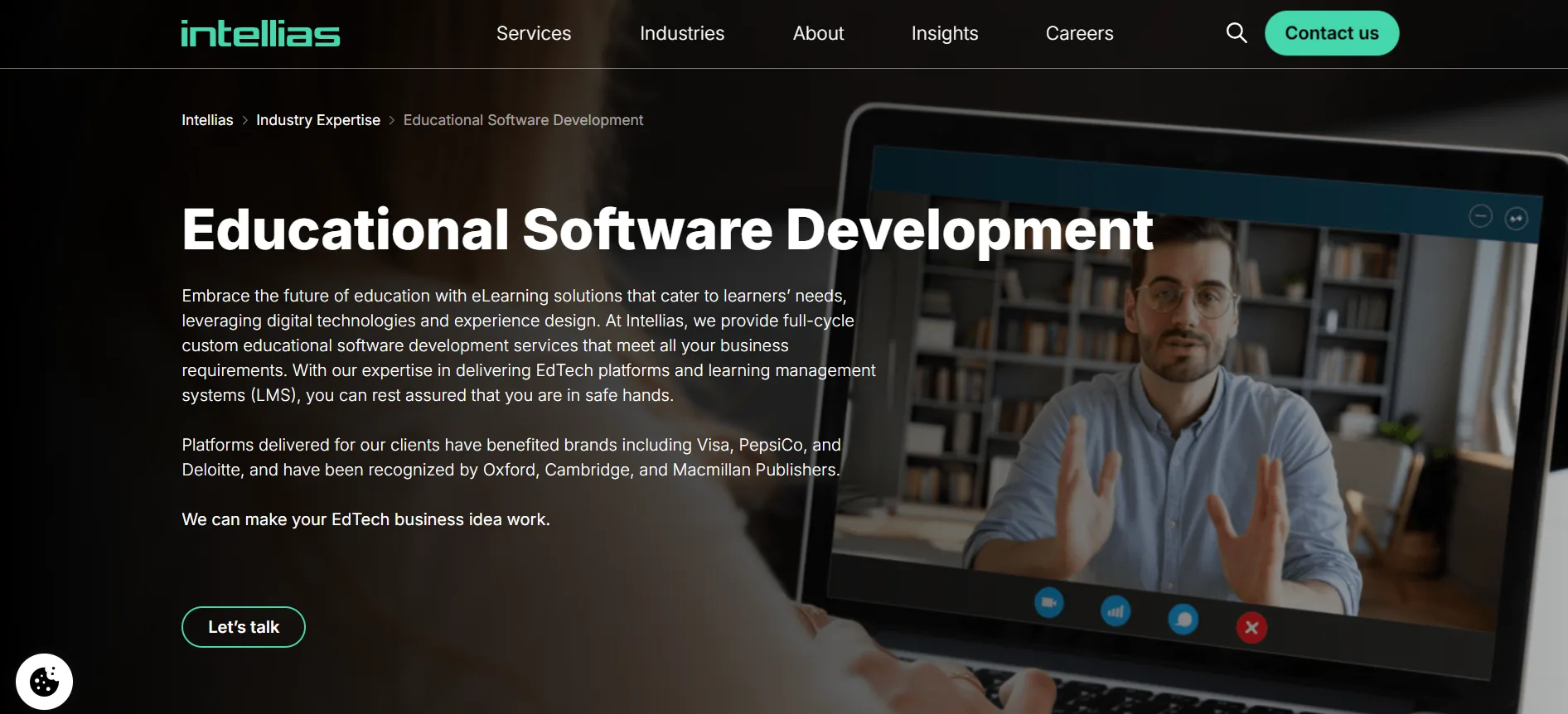
Intellias is a full-cycle EdTech development firm with offices across North America, South America, Europe, and Asia.
They build custom e-learning platforms, implement learning management systems, and work with technologies like machine learning, virtual reality, and augmented reality.
They also handle cloud migration and DevOps, so the platforms they build are actually built to scale. Their clients include big names like Visa, PepsiCo, and Deloitte, as well as educational publishers such as Oxford, Cambridge, and Macmillan.
Key Services:
- Custom e-learning platform and LMS development
- Education management platforms
- Customized learning environments
- EdTech marketplace development
- Chatbot development for education
- Gamification and simulations
- VR, AR, and XR applications for learning
- Language learning and language testing solutions
- Cloud migration and DevOps for educational platforms
6. Geniusee
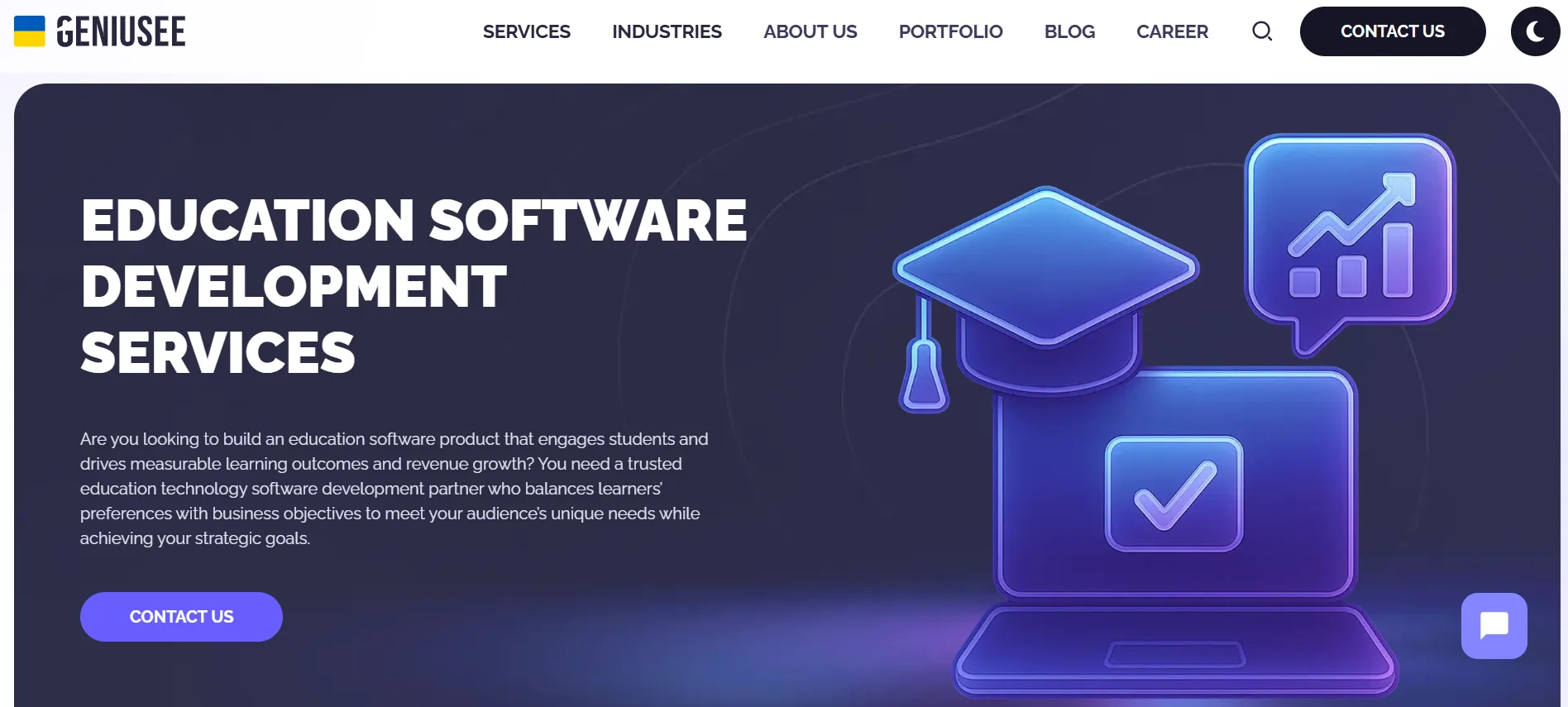
Geniusee focuses on EdTech product development for startups and smaller to mid-sized companies. Since starting in 2017, the team has delivered more than 100 projects across 64 technologies, with a solid reputation in mobile and web applications.
They build custom learning management systems, e-learning apps, school management software, virtual classroom platforms, and tutor booking systems.
Many of these solutions include AI capabilities like personalized learning paths, adaptive features, intelligent recommendations, automated grading, and chatbots.
Beyond development, Geniusee also offers LMS consulting to assist with system selection, smooth implementation, and future upgrades.
Key Services:
- Custom LMS development
- LMS integration with third-party tools
- E-learning web and mobile applications
- School management software
- Virtual classroom and video streaming platforms
- Tutor booking and tutoring marketplace platforms
- AI integration for personalized and adaptive learning
- Automated grading and feedback systems
- Chatbot development for tutoring and support
- Gamification for educational platforms
- LMS consulting and implementation
7. Hqsoftwarelab
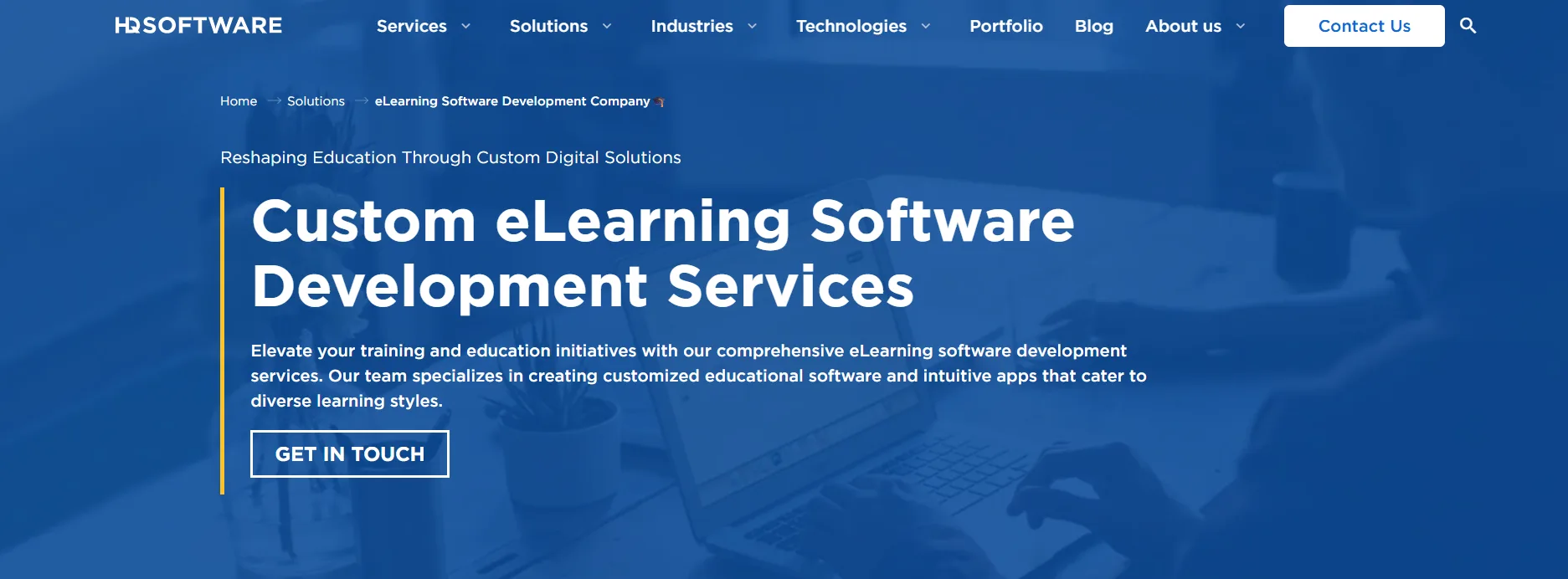
HQSoftwareLab is an education software company with over 20 years of experience.
The company develops e-learning solutions for corporate clients, EdTech startups, product companies, and educational institutions.
Their products include custom e-learning platforms, learning management systems, learning experience platforms, and AR/VR training simulations.
They also create virtual classrooms, student management systems, and assessment tools focused on accessibility and analytics. In addition, they provide AI personalization and integration services for existing platforms.
Key Services:
- Custom LMS, LXP, and e-learning platforms
- AR/VR simulations and virtual classrooms
- Mobile and web learning apps
- Student management, assessment, and analytics
- Corporate training platforms with compliance and skills tracking
- AI personalization and integration
- MVP development and platform enhancements
Conclusion
The seven companies featured here proved to be the strongest in this evaluation cycle.
Your unique circumstances, including your deployment schedule, integration requirements, and feature priorities, will determine which option is ideal for your company.
The testing criteria from this analysis—system stability, integration strength, and overall performance—are useful to remember. Ultimately, one of the most crucial elements in creating a successful virtual learning platform is choosing the appropriate provider.
