


A few decades ago, gaming meant sitting in front of a television with a controller or huddling around an arcade cabinet. The idea that a pocket-sized device could deliver immersive, high-quality gaming experiences seemed far-fetched.
Yet mobile gaming has not only caught up with traditional platforms — it has surpassed them. Today, it generates more revenue than console and PC gaming combined, reshaping how developers create games, how players engage with them, and how the broader entertainment industry operates.

From Snake to Smartphones: The Early Days
The roots of mobile gaming stretch back to the late 1990s, when Nokia preloaded simple titles like Snake onto its handsets.
These games were rudimentary by any standard, but they introduced millions of people to the concept of playing on a phone. The limited hardware meant developers had to work within tight constraints, producing games that were easy to pick up and quick to play.
The real transformation began with the launch of Apple’s App Store in 2008, followed closely by Google Play. Suddenly, independent developers and major studios alike had direct access to a global audience.
Games like Angry Birds and Temple Run proved that mobile titles could capture mainstream attention and generate massive revenue. The barrier to entry for both developers and players dropped dramatically, setting the stage for explosive growth.
Why Mobile Gaming Became Dominant?
Several converging factors propelled mobile gaming past its console and PC counterparts. Understanding these forces helps explain why the shift happened so quickly and so completely.
Smartphone penetration is the most obvious driver. With billions of active smartphones worldwide, the potential audience for mobile games dwarfs the install base of any console generation.
People who never considered themselves gamers started playing casually during commutes, lunch breaks, and idle moments. Gaming became ambient — woven into daily life rather than reserved for dedicated sessions.
The free-to-play model also played a critical role. By removing the upfront cost, developers eliminated the biggest friction point for new players. Revenue shifted to in-app purchases, battle passes, and advertising.
This model proved extraordinarily profitable. Titles like Genshin Impact and PUBG Mobile demonstrated that free-to-play games could achieve production values rivaling full-price console releases while generating billions in revenue.
| Factor | Impact on Mobile Gaming Growth |
| Smartphone penetration | Billions of devices created the largest potential gaming audience in history |
| Free-to-play model | Removed upfront cost barriers, driving mass adoption and in-app revenue |
| Hardware improvements | Narrowed the performance gap between mobile devices and dedicated consoles |
| Cross-platform play | Positioned mobile as an equal destination alongside PC and console |
| Cloud gaming | Bypassed hardware limitations by streaming demanding titles to phones |
Hardware improvements accelerated the trend further. Modern smartphones feature powerful processors, high-refresh-rate displays, and advanced GPUs capable of rendering complex 3D environments.
The gap between mobile and dedicated gaming hardware has narrowed significantly, making it possible to deliver experiences that once required expensive setups.
The Ripple Effect Across Entertainment
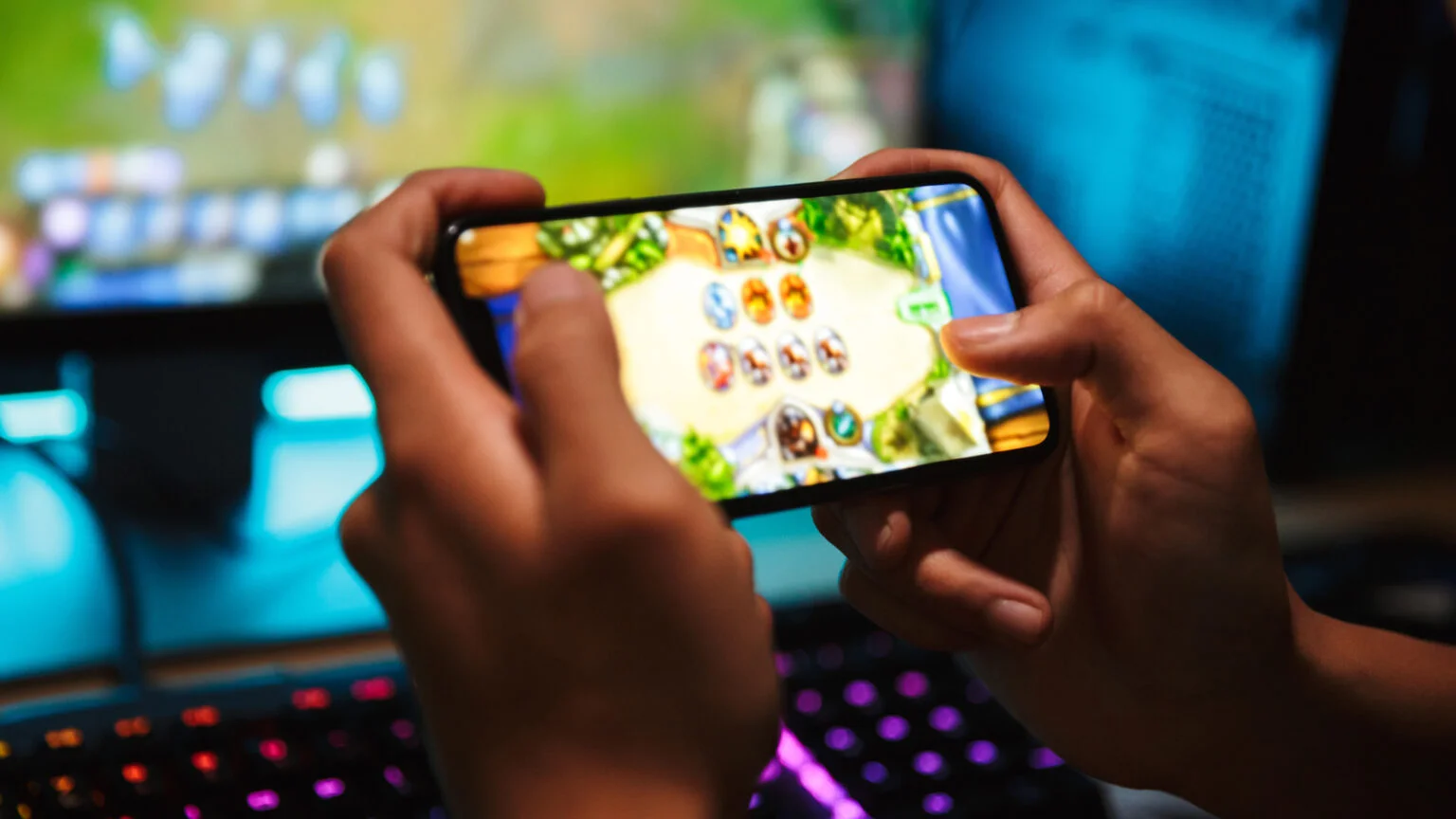
Mobile gaming’s dominance has influenced industries far beyond traditional gaming. Social media platforms integrated gaming elements to boost engagement. Streaming services began exploring interactive content. Even online entertainment platforms adapted their strategies to prioritize mobile-first experiences.
For instance, platforms like Runa Casino have optimized their offerings for mobile users, recognizing that players increasingly expect seamless access from their phones without compromising on quality or variety.
The esports scene has also felt the impact. Mobile esports tournaments, particularly popular in Southeast Asia and Latin America, draw massive viewership numbers.
Games like Mobile Legends and Free Fire have built competitive ecosystems that rival traditional PC esports in certain regions, expanding the definition of professional gaming.
How Developers Adapted Their Strategies?
The shift to mobile forced developers to rethink fundamental aspects of game design. Session length became a key consideration — mobile games needed to accommodate players who might only have a few minutes at a time.
User interfaces had to be reimagined for touchscreens rather than controllers or keyboards. Monetization strategies required careful balancing to avoid alienating players while sustaining profitability.
Cross-platform play emerged as another significant adaptation. Many studios now launch titles simultaneously on mobile, console, and PC, allowing players to switch between devices without losing progress.
This approach acknowledges that mobile is no longer a secondary platform but an equal — or even primary — destination for gaming content.
Cloud gaming services have further blurred the lines. By streaming demanding titles directly to mobile devices, these services bypass hardware limitations entirely, making virtually any game accessible on a smartphone with a stable internet connection.
A Pocket-Sized Revolution That Reshaped Everything
Mobile gaming’s takeover was not a sudden event but a steady accumulation of technological advances, business model innovations, and shifting player habits. What started with monochrome puzzles on early handsets has evolved into a dominant force that generates over half of all global gaming revenue.
The industry continues to evolve rapidly, with augmented reality, AI-driven personalization, and ever-improving hardware pushing the boundaries of what mobile devices can deliver. The device in your pocket is no longer just a phone — it is the world’s most widely used gaming platform.
