


Lenovo’s 13-inch detachable Googlebook now has a final name and a rough release window. Renders that Evan Blass posted on November 15, 2026 call it the Lenovo Googlebook Duet 13, and the leak points to a January 2027 arrival. If you’ve been waiting for a Duet that runs Googlebook OS instead of buying a clamshell, this is the device to watch.
The tablet has been tracked for months, first under the board codename “Sapphire” and later as the Duet m, the name that turned up in a Bluetooth SIG database listing in August. Duet 13 puts it in line with the size-based names on other Googlebooks. Neither Lenovo nor Google has announced the tablet, a release date or a price.
The new images show the back of the device. There’s a kickstand cover with a diagonal fold, much like the one on the Chromebook Duet 11, along with a detachable keyboard and a USB-C port on the left edge.
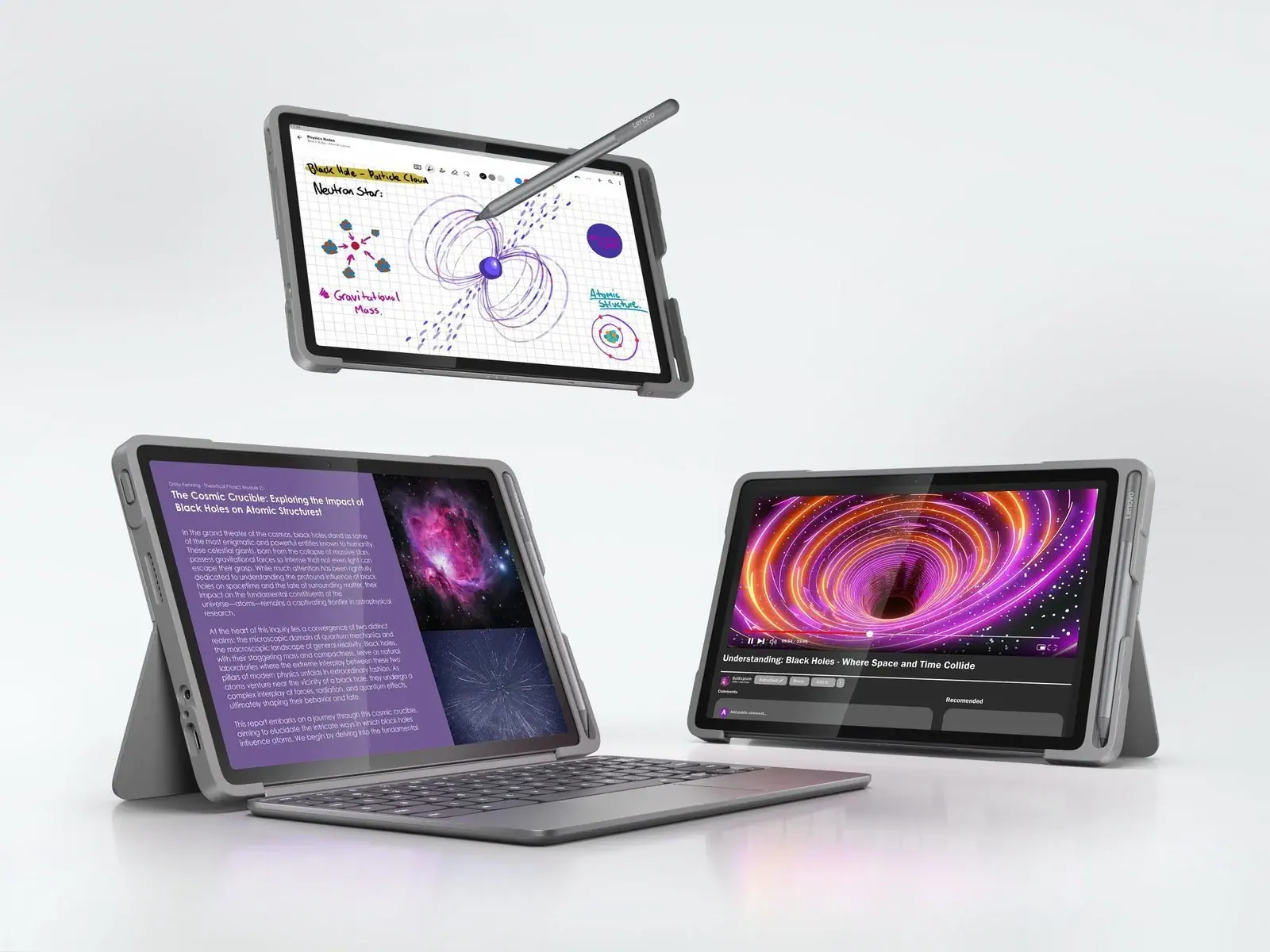
The specs come from earlier FCC filings and firmware, not from these renders. They point to a MediaTek Dimensity chip, 16GB of RAM and a stylus that charges wirelessly. The keyboard works two ways, snapped on through pogo pins or detached over Bluetooth on its own battery, which matches what the keyboard’s FCC paperwork showed.
The delay probably does this tablet a favor
Lenovo left the Duet out of Google’s September hardware event, and that now looks like the right move. Googlebook OS launched with rough edges, and the review telling buyers to skip the Lenovo Googlebook 15 blamed the software, not the hardware. A detachable depends on tablet mode much more than a clamshell does, so every extra month of fixes matters. Google is still shipping updates like Chrome 157 and its fix for broken web app installs.
If you want a Googlebook tablet, hold off until this one arrives rather than settling for a clamshell now.
A January window puts the Duet 13 close to CES, which runs January 6 to 9, 2027 in Las Vegas, though nobody has confirmed a reveal there. Value is the open question. The original Duet sold on its low price, and a 13-inch screen with 16GB of RAM suggests this one won’t be cheap. Budget shoppers have other options coming too, with Pelion becoming the ninth lower-cost Intel Googlebook board in Chromium code.
