


I’d been stewing about something Chromebook-related for a while and in June 2020 I hit my boiling point.
When I looked at Chromebook listings on Amazon’s site, I was astounded by how many older Chromebooks were shown with misleading titles such as the “Newest” or “2020” model when in fact, the device was an older Chromebook.
Some were even from Amazon’s own stock as they’re renewed or refurbished models. That point was clearly stated, but even so: These were often not new or that year’s models. And even worse for all Chromebook listings, but especially for the less current devices, there was no mention of when Google will cease providing software updates for them.
Need some examples that might sway potential buyers who think they’re getting a current model Chromebook when in fact, they’re not? These are screen shots from Amazon in June 2020; I didn’t link to the products because I didn’t want to see anyone actually purchase an old Chromebook that’s advertised as “new” or from 2020.
Here’s the MediaTek-powered 2020 Acer Chromebook R13, which launched in 2016. Back then I had it losing software updates in June of 2024. Google’s Auto Update policy page now lists August 2026, and only if you opt in to extended updates. Either way, that date has passed:

The “date first available” in the listing was May 1, 2020. For folks not in the know, it was reasonable to assume this Chromebook debuted the month before. In reality, it was almost four years old and the listed date is when Amazon made this particular renewed item available.
How about another example, like this renewed 2020 Lenovo Chromebook N22? Amazon’s date first available was May 9, 2020, so it must have been a recent model, right?

Nope, this device launched in early 2016. You can tell by the old Intel Celeron N3050 processor, a now-discontinued chipset that debuted in the first quarter of 2015! Well, you can tell if you know what you’re looking at, that is. And the N22 stopped getting automatic software updates in June 2022, so buyers were looking at no more than two years of security updates.
The same chipset and software update expiration date applied to the HP Chromebook 11 that Amazon had listed as a 2020 model. And this one wasn’t even a refurbished or renewed unit! This was just left-over inventory from 2016!

There were many other examples, but you get the point. And these were typically among the first devices shown when you generically searched Amazon for a Chromebook. I’m sure many of these devices were sold because of that and the perception of a good deal.
Let’s be honest: In 2020, none of these were a good deal. In 2026, every one of them is past its update date.
They all had relatively poor performance as compared to comparable or lower-priced actual 2020 Chromebook models.
Put another way: Do. Not. Buy. These.
The old stock hasn’t gone away, either. PCWorld’s Black Friday roundup from November 16 includes a renewed Dell Chromebook 11 3100 on Amazon for $95, a school-fleet model with a Celeron N4020 and 16GB of storage. PCWorld at least tells you Google’s updates for it end in June 2029.
Instead, look at the newer devices that are in the same price bracket of up to $350.
In 2020, I said you would be much happier and have a device that will get Chrome OS software updates for a good six to eight years with any of this small sampling of devices:
- The 11.6-inch Lenovo Chromebook C340 with a $320 list price, then on sale for $286.
- The similar Samsung Chromebook 4 at $199 or the larger 15-inch Samsung Chromebook 4+ for $299.
- Or even the 14-inch Lenovo IdeaPad 3, which cost $250 and impressed me at the time for the price.
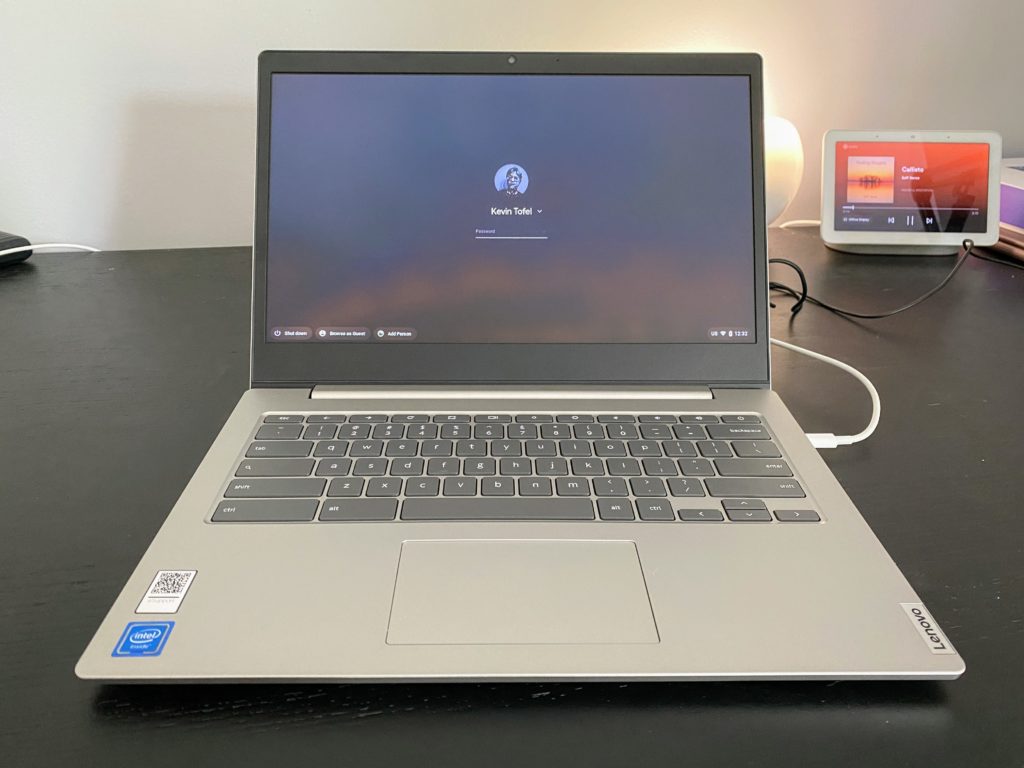
Those held up: Google now lists all four through June 2029. Today’s equivalents do better, since Chromebooks released from 2021 onward get 10 years of updates from the platform’s release. The Asus Chromebook CX15, $197 at Walmart in mid-November, is listed through June 2031 or June 2033 depending on the variant. The Acer Chromebook Plus 514 (CB514-6HT), which fell to $319 in Walmart’s early Black Friday sale, runs to June 2035. Google says ChromeOS itself gets updates through mid-2034, with newer models due to move to Googlebook OS after that, so check the support end date by model number before you buy.
Frankly, it feels like Amazon is taking advantage of new Chromebook buyers’ naiveté when it comes to these ads.
The Chromebook market as compared to that of Windows and macOS laptops is still relatively small, as the bulk of people really don’t have a good understanding of what ChromeOS is, and Googlebooks at $899 and up now add another name to sort out. So when they see a low-cost Chromebook, especially when it’s listed as “newest” or with the current year, they’ll likely never know that the device is based on hardware that’s several years old.
It’s simply wrong.
And I hope Amazon puts a stop to it because while it may be good for it as an online retailer, a terrible end-user Chromebook experience does nothing to help advance the ChromeOS market and fleeces customers who think they’re getting something that they’re not.
