


Most online stores are asset-rich and motion-poor. Hundreds of clean product photographs sit in a shared drive while every advertising channel quietly favours video, and paid performance drifts downward without an obvious cause.
Commissioning a shoot for a fifty-item catalogue is slow and expensive, and by the time it wraps, half the range has changed. This playbook takes the opposite route: build a motion programme from the photography you already paid for, using a repeatable process that a one- or two-person marketing function can actually sustain.
The Real Bottleneck Is Production Economics
Traditional video cost scales with the number of products. Filming ten items costs roughly ten times filming one, which is why most catalogues are represented by a single hero film and nothing else. Meanwhile, feed algorithms and product pages both reward variety.
The mismatch between what platforms reward and what production budgets allow is the core problem, and no amount of clever scheduling solves it.
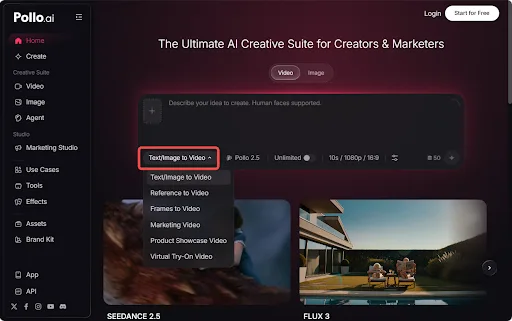
Generation from existing stills breaks that relationship. Within Pollo AI, the turn photos to videos module converts a flat-lay or packshot into a high-definition clip with believable camera movement, matched cinematic scoring, and ambient audio, holding fine detail such as fabric weave, metal finishing, or label typography.
Because the result arrives essentially finished, there is no editing queue between generation and publication.
The knock-on effect for ecommerce teams is structural. Creative testing stops being a quarterly exercise reserved for flagship SKUs and becomes a weekly habit applied across the range. Merchants who once produced twelve videos a year now produce that many in a fortnight, and their advertising data improves simply because there is more of it.
The Five-Stage Workflow
Before generating anything, spend an afternoon consolidating every usable image into one organised location, tagged by product, scene type, and usage rights. Sort into three groups: hero shots showing the whole item, detail shots revealing texture, and lifestyle shots containing a human element.
Most teams uncover several hundred forgotten assets. This bank is what makes batch production possible, because you never begin a week from an empty page.
Stage 1: Plan in themes, not individual posts
Choose one angle per week — a material benefit, a common customer question, a seasonal use case. Ten clips built around a single theme are dramatically faster to produce than ten unrelated ones, since research, tone, and caption patterns carry across the batch.
Stage 2: Batch-generate the motion layer
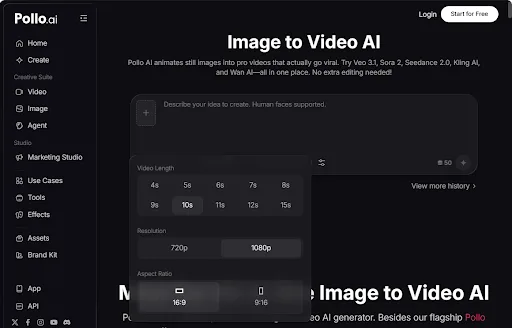
Block ninety uninterrupted minutes and run your shortlist through turn photos to videos in Pollo AI, producing two or three variations per source image. Work mechanically and resist judging results mid-session; separating generation from selection is the single largest efficiency gain most teams report.
Keep camera instruction restrained — a slow orbit or subtle push reads as premium, while an aggressive zoom reads as stock footage.
Stage 3: Review as a set, then cut hard
Lay every generation side by side and evaluate with fresh eyes. Expect to keep around forty percent early on, rising as your prompting sharpens. Reject anything that warps a logo, bends printed text, or moves unnaturally around a product edge.
Three checks are enough: is the item identifiable within one second, is the movement physically plausible, does the audio support rather than distract.
Stage 4: Multiply formats and creative angles

A clip is not an asset until it exists in the shapes your channels demand. insMind is built for this multiplication stage, running at roughly ten times the speed of conventional generators so producing another variant never becomes the reason a campaign slips.
Its catalogue of two hundred-plus viral short-video presets covers the formats performance teams actually use — rapid product reveals, trend-styled promos, atmospheric brand cuts — while its art-style filters give seasonal campaigns a distinct visual identity without a designer’s involvement.
For merchants building continuous sequences, the custom first-and-last-frame control is the practical highlight, letting several product clips flow into one another cleanly enough to serve as a short brand film. Its AI agent also completes image and video tasks from a single instruction, which suits small businesses and social teams who need output daily rather than occasionally.
Stage 5: Deploy, measure, recycle
Publish at least three creative variants per product and let the platform allocate budget. Track three-second view rate to diagnose hooks, completion rate for pacing, and click-through for offer clarity. After a week, retire the weakest performer, keep the strongest, and generate two fresh alternatives from a different source photograph.
Where the Gains Concentrate
Product pages benefit as much as feeds. A short looping clip beside the buy button answers questions that copy cannot — how large the item really is, how a surface catches light, how a garment falls.
Print-on-demand sellers, homeware brands, and accessory makers see the clearest lift, because their purchase hesitation is usually about physical qualities rather than price.
Content calendars also stabilise. When another clip costs minutes, a missed shoot no longer creates a gap in the schedule. Marketing teams that adopt preset-driven tools such as insMind typically report that the reduction in visual production workload matters more than any individual output, since it frees attention for positioning, offers, and analysis.
Frequently Asked Questions
How many videos per week is realistic for a two-person team?
Fifteen to twenty-five once the asset bank exists and batching becomes routine. The first fortnight will be slower while prompting improves.
Does higher volume dilute brand perception?
Only if consistency slips. Fixed palettes, repeating openings, and template-driven formats protect brand integrity at speed.
Which categories work best?
Hard goods, packaging, apparel flat-lays, and anything with strong texture. Products requiring detailed hand interaction remain the hardest case.
Conclusion
Scaling ecommerce video is an operations problem wearing a creative costume. Consolidate your photo library, plan in weekly themes, batch your generation, review in groups rather than individually, adapt every keeper into channel-ready variants, and let performance data direct the next round.
Run the loop for four weeks before judging it. Most teams discover that the limit they blamed on budget was really a limit on workflow — and workflows can be rebuilt starting this week.
