


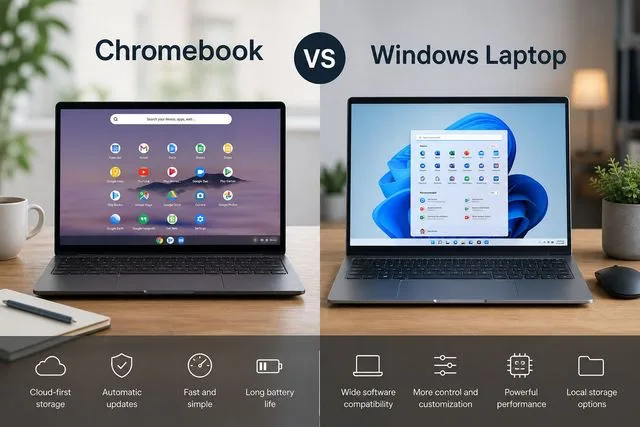
Choosing between a Chromebook and a Windows laptop in 2026 requires a clear understanding of how each system works in daily use.
Both options handle common tasks such as browsing, document editing, and video calls, yet they differ in structure, software support, and long-term value. This article explains the key differences with practical details so you can make an informed decision.
Online casinos have grown into a structured digital sector where users access games, payment systems, and account management tools through web platforms.
Many players explore different services, and in that process they may come across platforms like thorfortune while comparing features, bonuses, and usability across sites.
This segment operates under varying regulations depending on the region, and users often evaluate factors such as transparency, interface clarity, and transaction speed before choosing a service.
Core system approach
A Chromebook runs on a lightweight operating system built around a web browser. Most tasks rely on cloud services, web apps, and mobile applications.
A Windows laptop uses a full desktop operating system that supports a wide range of software installed locally.
This difference shapes the overall experience:
- Chromebooks focus on speed and simplicity
- Windows laptops support complex programs and deeper system control
A Chromebook starts quickly and stays responsive even on modest hardware. A Windows device requires stronger components to maintain the same level of performance over time.
Performance and hardware
Performance depends on both hardware and system design. Chromebooks use efficient processors and often include less memory. Windows laptops span a wider range, from entry-level machines to high-performance systems.
Key points:
- Chromebooks run smoothly on lower specifications
- Windows laptops scale from basic to high-end configurations
- Storage types differ: cloud-first vs local storage
A Chromebook handles browsing, streaming, and document work without noticeable lag. A Windows laptop can run demanding software such as video editing tools, engineering programs, or large games.
If you plan to run advanced applications, a Windows laptop offers more headroom. If your workload stays simple, a Chromebook delivers consistent speed without complexity.
Software compatibility
Software support creates one of the biggest differences.
Chromebooks rely on:
- Web applications
- Mobile apps
- Limited desktop tools through compatibility layers
Windows laptops support:
- Full desktop applications
- Legacy software
- Specialized programs for professional use
This means a Chromebook fits users who work mostly online. A Windows laptop suits those who need specific software that cannot run in a browser.
For example, a user who edits documents, manages email, and attends meetings can complete all tasks on a Chromebook. A user who develops software or edits large media files needs the broader compatibility of Windows.
Offline capabilities
Internet access affects usability.
Chromebooks depend heavily on a connection, although many apps now support offline modes. Windows laptops operate fully offline once software is installed locally.
| Feature | Chromebook | Windows Laptop |
| Offline access | Limited for some apps | Full system functionality |
| File storage | Cloud-focused | Local and cloud options |
| Software availability | Web and mobile apps | Full desktop applications |
If you work in areas with unstable connectivity, a Windows laptop gives more control. If you stay connected most of the time, a Chromebook handles daily tasks without issues.
Security and updates
Security design differs significantly.
Chromebooks use a locked-down system with automatic updates. The system isolates applications and reduces the risk of harmful software.
Windows laptops allow deeper system access, which increases flexibility but also requires more user attention for updates and protection.
Security characteristics:
- Chromebooks update automatically in the background
- Windows systems require manual attention in some cases
- Chromebooks restrict system-level changes
- Windows allows full control over files and settings
A Chromebook suits users who want minimal maintenance. A Windows laptop suits users who prefer control over system behavior.
Ease of use
Ease of use depends on familiarity and expectations.
Chromebooks offer:
- Simple interface
- Fast setup
- Minimal configuration
Windows laptops provide:
- More customization
- Broader settings control
- Familiar desktop environment for many users
A Chromebook feels straightforward from the first start. A Windows laptop may require more setup but allows deeper adjustments later.
Battery life
Battery life plays a major role in portability.
Chromebooks often deliver longer battery life due to efficient hardware and lightweight software. Many models last a full workday without charging.
Windows laptops vary widely:
- Entry-level models may match Chromebook battery life
- High-performance models consume more power
If you prioritize long usage without charging, a Chromebook often meets that need. If you need strong performance, you may accept shorter battery life on a Windows laptop.
Price range and value
Price affects the decision for many buyers.
Chromebooks usually cost less because they use simpler hardware. Windows laptops cover a wide price range, from budget devices to premium machines.
Typical price structure:
- Chromebooks: low to mid-range
- Windows laptops: low, mid, and high-end
Lower cost does not always mean lower value. A Chromebook can meet all needs for users who rely on web-based tasks. A Windows laptop justifies higher cost when you need advanced features.
When evaluating value, consider how you plan to use the device rather than focusing only on price.
Storage and file management
Storage approach differs between the two systems.
Chromebooks emphasize cloud storage. Files sync automatically, and local storage remains limited.
Windows laptops provide larger local storage and allow flexible file organization.
Main differences:
- Chromebooks store most files online
- Windows laptops store files locally by default
- Chromebooks require less manual backup
- Windows users manage backups themselves
If you prefer automatic syncing and minimal file management, a Chromebook simplifies the process. If you handle large files or prefer local control, a Windows laptop fits better.
Use cases
Different use cases highlight strengths of each option.
Chromebook fits well for:
- Students who write, research, and attend classes online
- Remote workers using browser-based tools
- Users who prioritize speed and simplicity
- Everyday tasks such as streaming and communication
Windows laptop fits well for:
- Software development
- Video and audio editing
- Gaming
- Professional applications with system requirements
Your choice depends on what you do most often.
Longevity and maintenance
Longevity depends on system updates and hardware wear.
Chromebooks receive automatic updates for a defined period. After that period ends, security updates stop.
Windows laptops can run for many years if hardware remains functional, though performance may decline without upgrades.
Maintenance differences:
- Chromebooks require minimal maintenance
- Windows laptops may need periodic cleanup
- Chromebooks limit user changes
- Windows allows upgrades such as storage or memory in some models
If you prefer a device that works without ongoing attention, a Chromebook offers that experience. If you plan to upgrade or modify your system, a Windows laptop gives more freedom.
Learning curve
Learning curve varies based on prior experience.
A Chromebook requires little time to understand. Most actions resemble browser usage.
A Windows laptop may require more time, especially for advanced features.
However, users familiar with traditional desktop systems may feel more comfortable with Windows from the start.
Integration with other devices
Device integration affects productivity.
Chromebooks connect well with cloud services and mobile apps. They sync data across devices quickly.
Windows laptops integrate with a wider range of hardware, including specialized equipment.
Examples:
- Chromebooks sync easily with online accounts
- Windows laptops support external devices such as printers, cameras, and development tools
If your workflow depends on specific hardware, a Windows laptop provides broader compatibility.
Gaming and entertainment
Gaming creates a clear distinction.
Chromebooks support:
- Browser-based games
- Cloud gaming services
- Mobile games
Windows laptops support:
- Native PC games
- High-performance graphics
- Offline gaming
If gaming matters, a Windows laptop offers more options. If you use cloud gaming services, a Chromebook can still deliver acceptable results.
Writing, browsing, and daily work
For everyday tasks, both systems perform well.
Typing documents, browsing websites, watching videos, and managing email feel smooth on both platforms.
The difference appears when tasks become more complex or require specific software.
A Chromebook handles routine tasks with minimal setup. A Windows laptop handles both simple and advanced tasks without switching devices.
Practical decision guide
You can simplify the choice by answering a few questions:
- Do you rely on specific desktop software?
- Do you work mostly online?
- Do you need strong performance for demanding tasks?
- Do you prefer simplicity or control?
Your answers point clearly toward one option.
If your work stays within browser-based tools, a Chromebook fits well. If your tasks include specialized software or heavy workloads, a Windows laptop remains the practical choice.
Final thoughts
In 2026, both Chromebook and Windows laptop options meet different needs rather than competing directly. Each system reflects a distinct approach to computing.
A Chromebook offers speed, simplicity, and low maintenance. A Windows laptop offers flexibility, software compatibility, and performance range.
The right choice depends on how you use your device each day. Focus on your tasks, not on general comparisons. When you match the system to your workflow, you avoid unnecessary complexity and get consistent results.
